

LETTER FROM THE EDITOR |
|
Dear Colleague, This issue highlights two practical themes in edge AI: data foundations for AI and safety-critical edge AI. Across these articles, a common engineering lesson emerges: building successful systems requires not just strong models, but disciplined work on the data pipeline and careful design for safe operation in demanding real-world environments. That same focus on robustness, reliability and real deployment challenges carries into the Embedded Vision Summit program. The Embedded Vision Summit will feature four sessions focused on training data, and the engineering challenges it presents: how to build, maintain and defend the data pipelines that determine whether models hold up in the field, from collection and curation to dataset completeness, generative AI-driven refinement and recovery from data poisoning. If you face training data challenges of your own, you won’t want to miss these talks. The Summit takes place in Santa Clara, California May 11-13, 2026.
Without further ado, let’s get to the content. Erik Peters |
BUILDING AND DEPLOYING REAL-WORLD ROBOTS |
DATA FOUNDATIONS FOR AI |
 |
|
Introduction to Enhancing Data Quality for AI Success In this presentation, recorded at the 2025 Embedded Vision Summit, Aarohi Tripathi, Senior Data Engineer at CVS Health, focuses on the critical role that high-quality data plays in the effectiveness and accuracy of AI models. Since AI systems learn patterns from data, ensuring that the data is clean, diverse, accurately labeled and regularly updated is essential for optimal performance. Poor-quality data can lead to inaccurate predictions, biased results and underperforming models. By implementing strategies such as data cleansing, augmentation and proper annotation, organizations can improve the training process, resulting in more reliable, fair and effective AI systems. The success of AI initiatives depends as much on the data used as on the algorithms themselves. You’ll learn here how to optimize the use of your data. |
 |
|
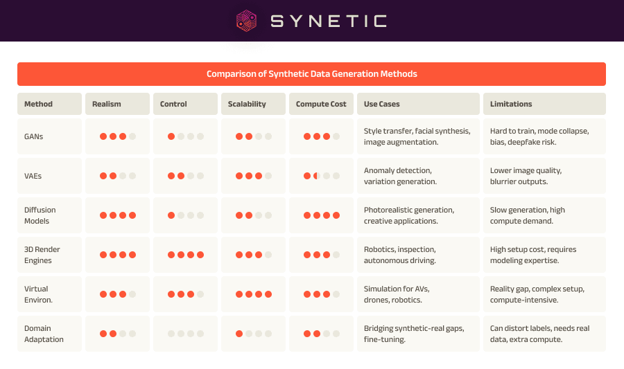
Article: Synthetic Data for Computer Vision Synetic explains how synthetic data is reshaping computer vision by giving teams a faster, cheaper way to generate large, fully labeled datasets tailored to specific use cases. Synetic argues that synthetic data is especially valuable for covering rare events, dangerous scenarios and other edge cases that are hard to capture in the real world, while also warning that success depends on realism, domain expertise and careful validation against real-world data. This article also walks through the main synthetic data approaches—including GANs, VAEs, diffusion models, 3D rendering engines and virtual environments—and outlines the tradeoffs among image quality, controllability, compute cost and implementation complexity. For engineering teams, the takeaway is practical: synthetic data can be powerful, but it works best when matched carefully to the problem and combined with real-world testing. |
SAFETY-CRITICAL EDGE AI |
 |
|
Improving Worksite Safety with AI-powered Perception In this presentation from the 2025 Embedded Vision Summit, Sabri Bayoudh, Chief Innovation Officer at Arcure, explores how embedded vision is being used in industrial applications, including vehicle safety and production. He highlights some of the challenging requirements of these applications, including the need for low latency, high accuracy and robustness in diverse environments. Using real-world examples, he explains the critical role of 3D perception and shows how emerging technologies such as vision-language models are being used to enable important new capabilities and improved accuracy. |
 |
|
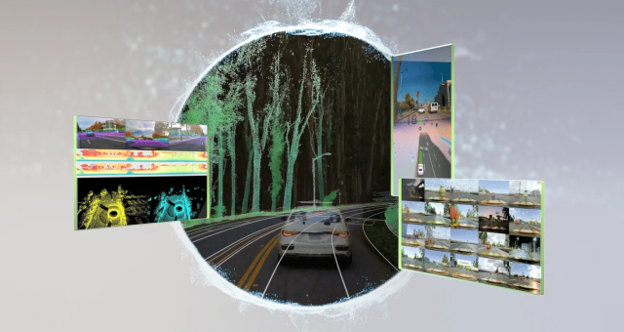
OpenUSD and NVIDIA Halos Accelerate Safety for Robotaxis, Physical AI Systems NVIDIA argues that safety is becoming a central engineering driver for edge and physical AI systems such as robots and robotaxies, not just a compliance layer added after deployment. It describes how the recently released OpenUSD (Universal Scene Description) standard and Omniverse-based simulation workflows let teams build high-fidelity digital twins, generate synthetic data and test rare or hazardous scenarios before systems operate in the real world—which is especially important for safety-critical autonomy. It also highlights NVIDIA Halos as a framework for making autonomous-vehicle validation more rigorous and scalable, including statistical methods that combine simulated and real-world testing and an inspection lab aimed at certification across AV stacks, sensors and fleets. The broader takeaway for engineers is that safer edge AI increasingly depends on tight integration among perception data, simulation, validation and standards-based system workflows. |
UPCOMING INDUSTRY EVENTS |
|
Remembering to Forget: Agentic Memory Systems and Context Constraints – Boston.AI Webinar: April 16, 10:00 am PT Embedded Vision Summit: May 11-13, Santa Clara, California Newsletter subscribers may use the code 26EVSUM-NL for 15% off the price of registration until April 10. |
FEATURED NEWS |
|
NVIDIA has partnered the global robotics ecosystem to power production-scale physical AI, and has released Cosmos world models, Isaac simulation frameworks, and GR00T N models STMicroelectronics and Leopard Imaging have introduced an all-in-one multimodal vision module for humanoid and other advanced robotics systems Nota AI and SiMa.ai have announced a partnership for physical AI technology collaboration NXP has implemented NVIDIA’s Holoscan Sensor bridge to deliver ready-to-deploy solutions for advanced physical AI |