
This blog post was originally published at Renesas’ website. It is reprinted here with the permission of Renesas.
From Connectivity Standards Alliance’s Matter™ and Aliro™ to Biometric Authentication
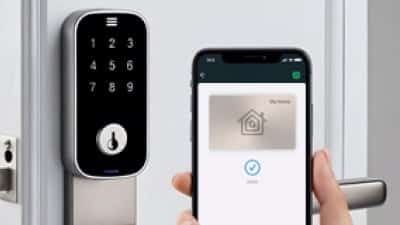
The growing demand for secure, easy-to-use, and seamlessly integrated access solutions is driving smart locks to the forefront of residential and commercial access control. Expansion of smart home automation and digital security is accelerating adoption as users increasingly expect keyless entry, remote access, and real-time notifications. At the same time, advanced biometric technologies are enhancing both convenience and security, further accelerating the shift toward smarter access systems. Today’s smart locks are expected to deliver secure, always-available access for homes, offices, and shared spaces while integrating smoothly into broader digital ecosystems. For manufacturers, however, meeting these expectations presents significant technical challenges.
Core Technical Challenges in Smart Lock Design
At the device level, smart lock designers must balance robust security with ultra-low power operation. A lock must remain responsive and secure while operating for months or even years on a battery, maintaining always-on connectivity with minimal energy impact. Wireless connectivity adds further complexity. Technologies such as Wi-Fi®, Bluetooth® Low Energy, Thread, Near-Field Communication (NFC), and Ultra-Wideband (UWB) must operate reliably through doors and walls, across varying distances, and in the presence of interference or connectivity disruptions. At the same time, manufacturers must defend against cyber threats, unauthorized access, and replay attacks using strong cryptography and secure firmware update mechanisms. Interoperability has historically been another major obstacle. Supporting multiple fragmented ecosystems increases development effort, certification costs, and long-term maintenance, particularly when addressing both residential and commercial markets with different identity management and access policy requirements.
How Emerging Standards Are Changing the Landscape
Emerging standards are beginning to reduce this fragmentation.
- Matter, developed by the Connectivity Standards Alliance (CSA), addresses interoperability at the smart home level by providing a unified, Internet Protocol (IP)-based framework for device communication and automation. For smart locks, Matter enables consistent control and monitoring, such as locking, unlocking, and status reporting, across ecosystems without proprietary integrations.
- Aliro, also developed by CSA, focuses on secure digital access credentials. It defines how mobile devices, wearables, and readers establish trusted, privacy-preserving access using NFC, Bluetooth Low Energy, and UWB. Designed for broad adoption, Aliro streamlines interoperability across access control environments ranging from residential buildings to offices, campuses, and hospitality. With backing from major mobile wallet ecosystems including Apple, Google, and Samsung, Aliro enables standardized digital credentials using the smartphones and wearables people already carry, simplifying secure access while protecting user privacy.
While standards address interoperability and security models, the smart lock industry is also being shaped by the integration of advanced biometric technologies, including facial recognition, which enable highly personalized and convenient access.
Smart Lock System Architecture for Aliro Connectivity
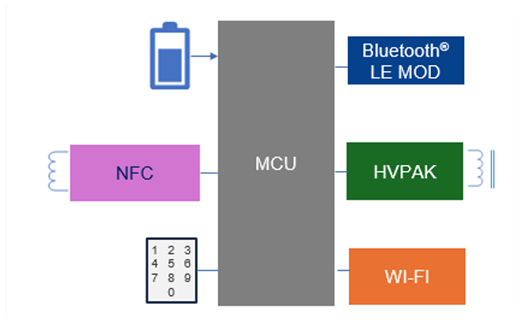
Figure 1. System architecture designed to support multiple lock and unlock methods, addressing the diverse requirements of smart lock providers
At the core of the system is the RA4M3 MCU, a general-purpose microcontroller featuring a 100MHz Arm® Cortex®-M33 core. It integrates the Renesas Secure Crypto Engine 9 (SCE9) for symmetric and asymmetric cryptography and supports Arm TrustZone®, providing strong protection against cyber threats.
The RA4M3 MCU:
- Implements the Aliro protocol stack
- Manages wireless connectivity devices
- Controls the lock motor through a connected high-voltage programmable mixed-signal matrix (HVPAK) motor driver
- Supports PIN-based entry using a capacitive touch interface
For contactless and wireless access, smartphone tap-to-unlock is supported using the PTX105R NFC reader IC, which is based on a sine-wave architecture. This design enables a highly compact NFC solution with a bill of materials reduced by up to three times compared to conventional readers. It operates without external EMI filters, supports smaller antennas that can be placed behind displays, and maintains strong noise immunity in environments with metal surfaces, motors, and displays. A low-power card-detection mode makes it particularly well suited for battery-powered smart locks.
Bluetooth Low Energy connectivity is provided by the DA14535MOD Bluetooth Low Energy module, which combines ultra-low power operation with ease of integration. With more than 100 million units deployed worldwide, it delivers proven interoperability across a wide range of devices, ensuring reliable wireless access.
For remote operation, the system supports Matter over Wi-Fi using either the RA6W1 Wi-Fi 6 MCU or the RRQ61001 Wi-Fi module. This dual-band Wi-Fi solution is optimized for Internet of Things (IoT) applications, enabling always-connected operation so the lock can respond instantly to remote commands, alerts, and firmware updates.
Together, NFC, Bluetooth Low Energy, and Wi-Fi enable a comprehensive, low-power connectivity solution for Aliro-enabled smart lock systems.
Edge AI Face Recognition at the Door
To further enhance security and convenience, Renesas and Aizip jointly developed an optimized on-device face identification solution. Running entirely on the RA8D1 MCU, this edge AI solution supports up to 100 users and maintains high accuracy even when users wear accessories such as glasses. By eliminating the need for cloud connectivity or external processing, it delivers fast, private, and reliable facial authentication directly at the edge.
Learn more about this solution from our facial recognition blog.
Smart Lock Demonstration Platform
To showcase these capabilities, Renesas developed a high-end smart lock demonstration platform, shown in Figure 2.
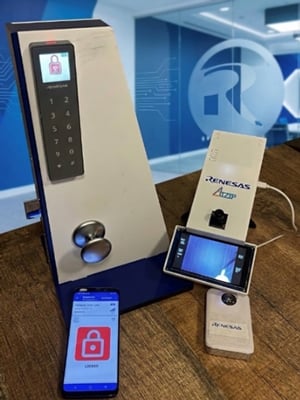
Figure 2. High-end smart lock demonstration platform
In this design, face recognition is implemented in a module, based on the RA8D1 MCU, and communicates with the main control system (Figure 1) via Bluetooth Low Energy, as illustrated in Figure 3.
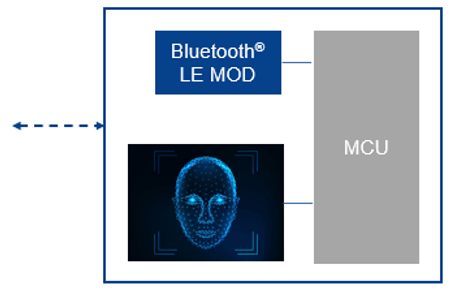
Figure 3. Facial recognition implemented by a Bluetooth Low Energy module
High-End Integrated Smart Lock Solution
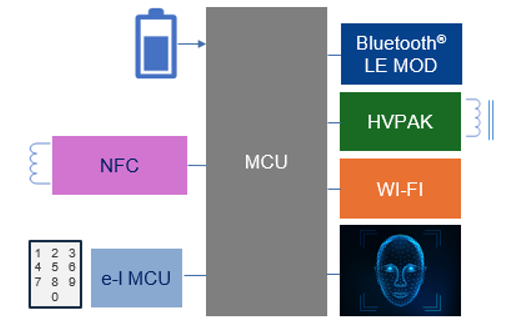
Figure 4 shows a fully integrated, high-end solution centered on the RA8D1 MCU, which features a 480MHz Arm Cortex-M85 core with Helium™ vector processing.
In this architecture, the RA8D1 MCU:
- Implements the Aliro protocol stack
- Manages all wireless connectivity interfaces
- Controls the lock motor through the HVPAK motor driver
- Supports PIN-based entry using a secondary entry-level MCU with capacitive touch
- Integrates Renesas Secure IP (RSIP E51A) for symmetric and asymmetric cryptography, along with Arm TrustZone
Conclusion
As smart locks evolve into always-connected, intelligent access points, manufacturers face a demanding combination of requirements: robust cybersecurity, ultra-low power operation, reliable wireless connectivity, and seamless interoperability across residential and commercial ecosystems. Emerging standards such as Matter and Aliro are helping reduce fragmentation, but their success ultimately depends on effective device-level implementation.
Renesas addresses these challenges with a scalable, system-level approach that combines secure, high-performance MCUs, ultra-low power wireless connectivity, advanced cryptographic capabilities, and edge AI. By supporting multiple access methods—including PIN, NFC, Bluetooth Low Energy, Wi-Fi, and biometrics, while enabling Matter and aligning with Aliro architectures, Renesas solutions give smart lock manufacturers the flexibility to target diverse markets without compromising security, power efficiency, or user experience. This architecture demonstrates how next-generation smart locks can integrate intelligence, privacy, and interoperability directly at the edge, enabling faster development of secure, future-proof access solutions for homes, businesses, and shared spaces.