
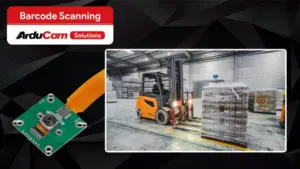
Optimizing Warehousing Efficiency: Arducam’s Custom Barcode Scanning Solution for Smart Forklifts
This blog post was originally published at Arducam’s website. It is reprinted here with the permission of Arducam. In the rapid evolution of smart warehousing, the forklift has transformed from a simple lifting machine into a sophisticated mobile data hub. For an Automated Identification Solutions provider, the challenge isn’t just about “taking a picture” of a barcode; it’s

Engineering Intelligence at the Physical Edge
As AI moves into vehicles, appliances and industrial systems, the next challenge is scaling physical intelligence safely, reliably and in real-world conditions This article was originally published at HCLTech’s website. It is reprinted here with the permission of HCL Tech. Key takeaways Physical AI is reaching an inflection point as intelligence moves into real-world systems
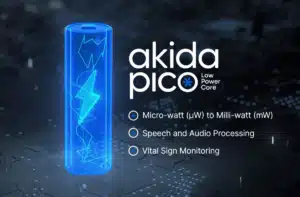
Akida Pico: The Tiny Brain Making “Always-On” AI a Reality
This blog post was originally published at BrainChip’s website. It is reprinted here with the permission of BrainChip. In the world of Edge AI, there’s always been a tradeoff: high intelligence, always-on capability, or long battery life. If you wanted a device to listen for a voice command or monitor something 24/7, you usually had to
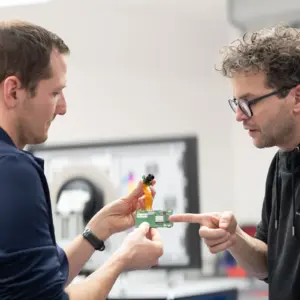
How Customized Single-board Computers Increase the Profitability of Embedded Vision Systems
This blog post was originally published at Helbling’s website. It is reprinted here with the permission of Helbling. Artificial Intelligence is one of the defining technological trends of this decade. In particular, vision-based AI applications, where camera data is processed directly on the edge, are gaining rapid momentum. Embedded Vision systems are the backbone of these
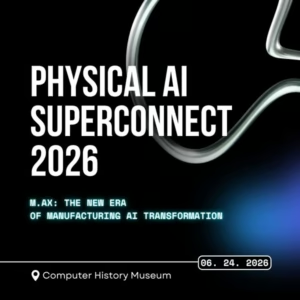
Upcoming Event on AI Transformation
KOTRA Silicon Valley will host “Physical AI Superconnect 2026,” on June 24, 2026, from 10:00 am to 8:00 pm PDT at the Computer History Museum in Mountain View, California. The event will feature insightful presentations, technology exhibits, matchmaking and networking. From the event page: M.AX: A New Era of Manufacturing AI Transformation Physical AI Superconnect
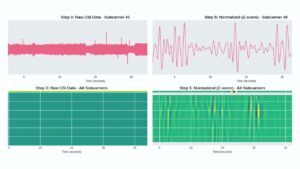
“Non-Contact Vital Sign Monitoring Using Low-Cost WiFi Devices,” a Presentation from the University of California, Santa Cruz
Katia Obraczka, Professor of Computer Science and Engineering, University of California, Santa Cruz, Pranay Kocheta, Lexington High School, and Nayan Bhatia, University of California, Santa Cruz present the “Non-Contact Vital Sign Monitoring Using Low-Cost WiFi Devices” tutorial at the December 2025 Edge AI and Vision Innovation Forum.

See How ams OSRAM Revolutionize Optical Solutions with the Help of Cadence Tools
OSRAM utilizes the Quantus SNA workflow for high-precision silicon. In modern semiconductor design, Heterogeneous Integration is the new frontier. When light detectors for Medical Imaging or depth sensors for Autonomous Systems are packed onto a single die alongside radio systems, the risk of interference skyrockets. For ams OSRAM, “sensing the power of light” means more
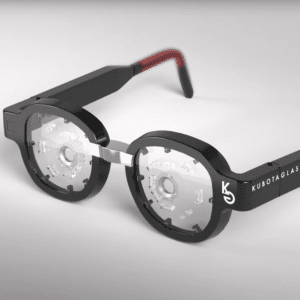
How to Ensure that High-tech Products Such as Smart Glasses are Brought to Market Quickly and Cost-effectively
This blog post was originally published at Helbling Technik’s website. It is reprinted here with the permission of Helbling Technik. A cure for myopia With more than 2.6 billion people living with the condition worldwide, Myopia – or short-sightedness – is one of the most common lifestyle-related diseases. The global prevalence of myopia is
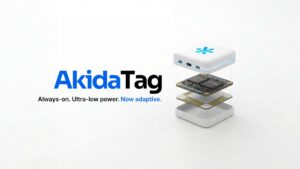
BrainChip Enables the Next Generation of Always-On Wearables with the AkidaTag Reference Platform
LAGUNA HILLS, Calif. — March 10, 2026 — BrainChip Holdings Ltd. (ASX: BRN, OTCQX: BRCHF, ADR: BCHPY), the world’s first commercial producer of ultra-low-power, fully digital, event-based neuromorphic AI, today announced at Embedded World in Nuremberg, Germany the launch of AkidaTag©, a reference platform for smart sensing in a battery-powered tag powered by Nordic Semiconductor. Intelligent wearable and remote industrial sensors

NXP and GE HealthCare Accelerate AI Innovation in Acute Care
NXP and GE HealthCare announced a collaboration to pioneer new advancements in edge AI innovation, beginning with new anesthesia and neonatal concepts showcased at CES 2026. LAS VEGAS and CHICAGO, Illinois, January 6, 2026 — NXP Semiconductors N.V. (NASDAQ: NXPI) and GE HealthCare (NASDAQ: GEHC) today announced a collaboration to pioneer new advancements in