

“Small Language Models for Edge AI: Trade-Offs and Quantization in Practice,” a Presentation from AMD
Dwith Chenna, MTS Product Engineer, AI Inference at AMD presents “Small Language Models for Edge AI: Trade-Offs and Quantization in Practice” at the May 2026 Embedded Vision Summit. Large language models are powerful but often

Synetic Demonstration of Synthetic Training Data for Computer Vision Edge Case Coverage
David Scott, CEO & Founder at Synetic, makes the case for synthetic training data as the most practical solution to edge case coverage in computer vision at the 2025 Embedded Vision Summit. Real-world data collection

Seeing the Invisible: How Advanced AFEs Give Robots True Self Awareness
This blog post was originally published at NXP Semiconductors’ website. It is reprinted here with the permission of NXP Semiconductors. If cameras, LiDAR and IMUs are a robot’s eyes and inner ear, then precision analog

Yole Group Forecasts Automotive Semiconductor Market Will Double to $160 Billion by 2031
Yole Group has released Automotive Semiconductor Trends 2026, a new market report examining how electrification, advanced driver-assistance systems, centralized computing and software-defined vehicle architectures are reshaping the automotive semiconductor industry. Yole forecasts that the market

Synetic Demonstration of the LYNX SDK Beta: Real-Time CV Across Six Platforms in One Call
David Scott, CEO & Founder at Synetic, demonstrates the LYNX SDK beta release at the 2026 Embedded Vision Summit. LYNX returns detection, segmentation, depth, and keypoints simultaneously from a single forward pass, eliminating the need

Synetic Demonstration of the LYNX Computer Vision SDK and Synthetic Data as a Service Platform
Will Ruffalo, Co-Founder at Synetic, introduces two of the company’s core offerings at the 2026 Embedded Vision Summit: the LYNX computer vision SDK and Synetic’s synthetic data as a service platform. LYNX delivers detection, segmentation,

What Quality Managers Get Wrong Before a Single Camera is Installed
This blog post was originally published at Lincode’s website. It is reprinted here with the permission of Lincode. The pilot looked great. Detection rates were strong, the demo impressed leadership, and the vendor was confident. Then

Qualitas Semiconductor – From High-Speed Interfaces to Silicon Validation
Qualitas Semiconductor, a leading provider of high-speed semiconductor IP, presents its cutting-edge IP portfolio powering the next generation of SoCs. From advanced interfaces like PCIe Gen6, UCIe 2.0, and MIPI, to silicon-proven PHY designs on
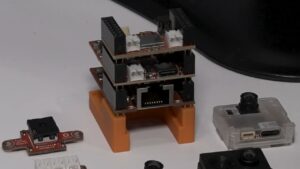
OpenMV Demonstration of Python-Programmable AI Vision with the N6, AE3, and OpenMV IDE
Kwabena Agyeman, President of OpenMV, demonstrates the company’s latest embedded AI vision technologies and products at the 2026 Embedded Vision Summit. Specifically, Agyeman showcases the OpenMV IDE’s live camera tuning and machine vision development workflow,

Microchip Advances Edge AI Sensor Connectivity with Rev 2.0 PolarFire® FPGA Ethernet Sensor Bridge
h3>Smaller, multi-camera platform enables scalable Ethernet architectures for NVIDIA Edge AI systems while lowering power, cost and integration complexity CHANDLER, Ariz., August 11, 2026 — The shift toward compact, high‑performance edge AI systems is redefining sensor connectivity, pushing developers to deliver power‑ and space‑efficient architectures that remain secure, scalable and future‑ready. To address these challenges, Microchip

“Understanding Transformers: From LLMs to Context-Aware Multimodal Models,” a Presentation from Synopsys
Tom Michiels, System Architect at Synopsys presents “Understanding Transformers: From LLMs to Context-Aware Multimodal Models” at the May 2026 Embedded Vision Summit. Transformers have become the foundation of modern AI, reshaping how products are built and how businesses operate. In this talk Michiels explains why transformers replaced earlier models, what… “Understanding Transformers: From LLMs to

Your NPU Learned to Listen
Whisper runs end-to-end on Chimera. Encoder and decoder compiled as native GPNPU kernels, INT4 weights, FP16 attention, top-1 token match against the float32 reference. Scales to four cores with a flag, no recompile. This blog post was originally published at Quadric’s website. It is reprinted here with the permission of Quadric. I ran a

NVIDIA Alpamayo 2 Super, the Frontier Open Model for Robotaxis and Autonomous Vehicles, Now Available for Commercial Use
Open commercial licensing, benchmark‑leading reasoning and inspectable decisions bring autonomous vehicles, including robotaxis, closer to production and widescale deployment. This news blog was originally published at NVIDIA’ website. It is reprinted here with the permission of NVIDIA. For robotaxis and other autonomous vehicles (AVs), the hardest problems aren’t the everyday scenarios. They’re the rare, complex situations that

“Exploring Radar SLAM: Advancing Localization and Mapping for Automotive, Robotics and Beyond,” a Presentation from Cadence
Amit Kumar, Director of Product Management and Marketing at Cadence and Amit Sulakhe, Director in the Vision Group at Cadence Pune present “Exploring Radar SLAM: Advancing Localization and Mapping for Automotive, Robotics and Beyond” at the May 2026 Embedded Vision Summit. Reliable localization and mapping are foundational for autonomous vehicles… “Exploring Radar SLAM: Advancing Localization

What are the Key Engineering Challenges in Autonomous Docking Systems and How are they Solved? (Part 2)
This blog post was originally published at e-con Systems’ website. It is reprinted here with the permission of e-con Systems. Designing an ROS 2-based autonomous docking system is only half the story. Deploying it in the real world is another matter entirely. Since real industrial environments don’t cooperate with textbook assumptions, understanding these challenges will help
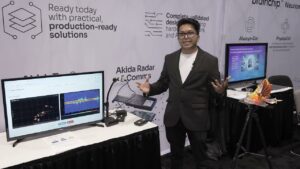
BrainChip Demonstration of the Company’s Always-On Radar-Based Edge Classification
Ritik Shrivastava, Solutions Architect at BrainChip, demonstrates Akida micro-doppler radar classification, a powerful radar-based object classification solution that runs entirely on-device without internet connection. Shrivastava showcases a live demo using BrainChip’s AKD1500 card attached to a Raspberry Pi, where the system detects and classifies between a bird and drone target in real time using radar.
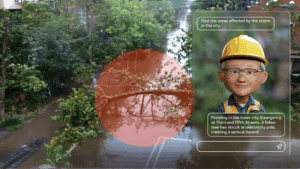
AI On: 3 Ways to Bring Agentic AI to Computer Vision Applications
This blog post was originally published at NVIDIA’s website. It is reprinted here with the permission of NVIDIA. Learn how to integrate vision language models into video analytics applications, from AI-powered search to fully automated video analysis. Today’s computer vision systems excel at identifying what happens in physical spaces and processes, but lack the abilities to explain the

SAM3: A New Era for Open‑Vocabulary Segmentation and Edge AI
Quality training data – especially segmented visual data – is a cornerstone of building robust vision models. Meta’s recently announced Segment Anything Model 3 (SAM3) arrives as a potential game-changer in this domain. SAM3 is a unified model that can detect, segment, and even track objects in images and videos using both text and visual