

From Warehouse to Wallet: New State of AI in Retail and CPG Survey Uncovers How AI Is Rewiring Supply Chains and Customer Experiences
This blog post was originally published at NVIDIA’s website. It is reprinted here with the permission of NVIDIA. The third annual NVIDIA State of AI in Retail and CPG survey shows why nine in 10 retailers will increase AI budgets in 2026, focusing on open-source models and software, as well as agentic and physical AI. Highlights

STMicroelectronics and Leopard Imaging Accelerate Robotics Vision with NVIDIA Jetson-ready Multi-sensor Module
Key Takeaways Multimodal module combining 2D imaging, 3D depth sensing, and human-like motion perception NVIDIA Holoscan Sensor Bridge ensuring multi-gigabit plug and play connectivity with Jetson platforms Fully supported by NVIDIA Isaac open robot development platform STMicroelectronics and Leopard Imaging® have introduced an all-in-one multimodal vision module for humanoid and other advanced robotics systems. Combining
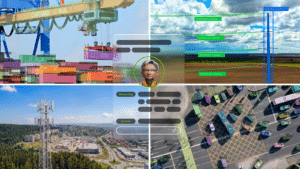
NVIDIA, T-Mobile and Partners Integrate Physical AI Applications on AI-RAN-Ready Infrastructure
News Summary: T-Mobile pilots NVIDIA RTX PRO 6000 Blackwell Server Edition AI infrastructure to demonstrate physical AI applications at the edge, complementing the AI-RAN Innovation Center’s distributed network Physical AI developers including Fogsphere, LinkerVision, Levatas, Vaidio and Siemens Energy are building reasoning and vision AI agents to the edge using the NVIDIA Metropolis Blueprint for

Lattice Joins NVIDIA Halos Ecosystem to Advance Safety for Physical AI with Holoscan Sensor Bridge
HILLSBORO, Ore. – Mar. 16, 2026 – Lattice Semiconductor (NASDAQ: LSCC), the low power programmable leader, today announced it has joined the NVIDIA Halos AI Systems Inspection Lab ecosystem, the first ANSI National Accreditation Board (ANAB) accredited inspection lab for AI-driven physical systems. Announced at the NVIDIA GTC 2026, Lattice will engage with NVIDIA and other Halos ecosystem members to
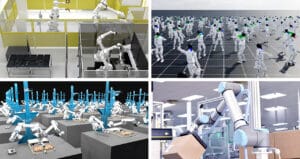
NVIDIA and Global Robotics Leaders Take Physical AI to the Real World
News Summary: Physical AI leaders across robot brain developers, industrial, and surgical robot giants and humanoid pioneers including ABB Robotics, AGIBOT, Agility, CMR Surgical, FANUC, Figure, Hexagon Robotics, KUKA, Medtronic, Skild AI, Universal Robots, World Labs and YASKAWA are building on NVIDIA technology to develop and deploy physical AI at scale. NVIDIA unveils new NVIDIA

NXP Delivers New Innovations for Advanced Physical AI with NVIDIA
Key Takeaways: Secure, reliable real-time data processing and transport solutions for next-generation physical AI applications, developed in collaboration with NVIDIA NVIDIA humanoid robotics solutions integrated into NXP’s safe, secure edge portfolio cut development costs and speed time to market First in a series of NXP’s foundational robotics solutions designed to accelerate physical AI development and
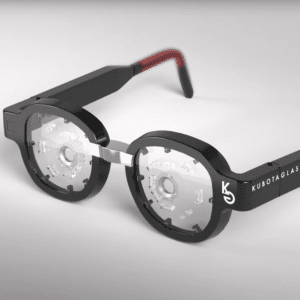
How to Ensure that High-tech Products Such as Smart Glasses are Brought to Market Quickly and Cost-effectively
This blog post was originally published at Helbling Technik’s website. It is reprinted here with the permission of Helbling Technik. A cure for myopia With more than 2.6 billion people living with the condition worldwide, Myopia – or short-sightedness – is one of the most common lifestyle-related diseases. The global prevalence of myopia is
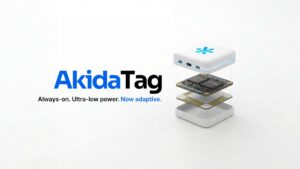
BrainChip Enables the Next Generation of Always-On Wearables with the AkidaTag Reference Platform
LAGUNA HILLS, Calif. — March 10, 2026 — BrainChip Holdings Ltd. (ASX: BRN, OTCQX: BRCHF, ADR: BCHPY), the world’s first commercial producer of ultra-low-power, fully digital, event-based neuromorphic AI, today announced at Embedded World in Nuremberg, Germany the launch of AkidaTag©, a reference platform for smart sensing in a battery-powered tag powered by Nordic Semiconductor. Intelligent wearable and remote industrial sensors
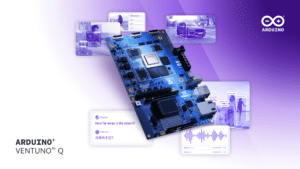
Arduino Announces Arduino VENTUNO Q, Powered by Qualcomm Dragonwing IQ8 Series
The new platform by the leading open-source hardware provider is purpose-built for generative AI, robotics, and actuation — making advanced capabilities accessible to all. Ahead of Embedded World, Arduino announced the upcoming launch of its newest platform to democratize edge AI, Arduino® VENTUNO™ Q. Named after the Italian word for twenty-one, VENTUNO Q builds on the iconic

Synaptics Introduces SYN765x, an Industry-Leading AI-Native Wi-Fi® 7 Solution for Integrated IoT Edge Applications
AN JOSE, Calif., Mar 10, 2026 — Synaptics Incorporated (Nasdaq: SYNA), today announced the SYN765x, an AI-native wireless solution that redefines Edge intelligence. As an industry-leading single-chip device combining AI-optimized compute with integrated Wi-Fi® 7, the SYN765x is designed to bring scalable, real-time intelligence directly to smart appliances, home automation systems, and Industrial IoT (IIoT) applications. SYN765x