
Blog Posts

The Software Gap Holding AI Back: What Semiconductor Leaders Can Learn From the EV Transition

This blog post was originally published at HTEC’s website. It is reprinted here with the permission of HTEC. The story of EV adoption contains a warning that semiconductor companies would be wise to take seriously. When the automotive industry made the leap from combustion engines to electric drivetrains, it discovered that a transformative technology is not enough on its own. The […]
The Software Gap Holding AI Back: What Semiconductor Leaders Can Learn From the EV Transition Read More +

Scaling Edge AI for the Enterprise: Building the Ultimate Multi-Model, Multi-Stream Security System

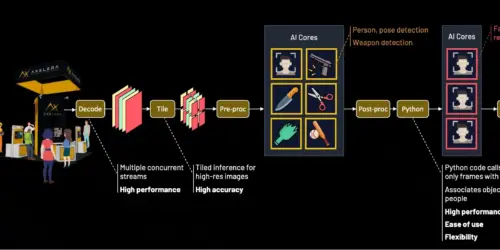
This blog post was originally published at Axelera AI’s website. It is reprinted here with the permission of Axelera AI. At a Glance The Achievement: Real-time AI person-of-interest (POI) identification and threat detection across multiple 8K streams at 2.5 PetaOPS The Stack: Voyager SDK + Axelera Metis + Intel Xeon The Future: 3x performance leap with

Scaling Edge AI for the Enterprise: Building the Ultimate Multi-Model, Multi-Stream Security System Read More +

How to Install OpenClaw and Hermes Agent on Qualcomm Arduino Boards, Rubik Pi 3 and Snapdragon PCs

This blog post was originally published at Qualcomm’s website. It is reprinted here with the permission of Qualcomm.   A Step-by-Step Guide with Arduino UNO Q, Rubik Pi 3, and PCs with Snapdragon Introduction Welcome, developers and tech enthusiasts! This blog post will guide you through running OpenClaw and Hermes Agent on Qualcomm Technologies’ platforms,

How to Install OpenClaw and Hermes Agent on Qualcomm Arduino Boards, Rubik Pi 3 and Snapdragon PCs Read More +

Improving CMOS Performance at Night

How Ubicept Photon Fusion enhances conventional sensors for automotive use   This blog post was originally published at Ubicept’s website. It is reprinted here with the permission of Ubicept. We’re back with another demo! Previously, we explored how Ubicept Photon Fusion (UPF) improves high-frame-rate CMOS imaging and how those improvements can translate into better downstream

Improving CMOS Performance at Night Read More +

How Customized Single-board Computers Increase the Profitability of Embedded Vision Systems

This blog post was originally published at Helbling’s website. It is reprinted here with the permission of Helbling. Artificial Intelligence is one of the defining technological trends of this decade. In particular, vision-based AI applications, where camera data is processed directly on the edge, are gaining rapid momentum. Embedded Vision systems are the backbone of these

How Customized Single-board Computers Increase the Profitability of Embedded Vision Systems Read More +

The Next Frontier in AI Is Not Just Reasoning. It Is Knowing When to Look Again

Why AI Metacognition Requires Hierarchical Random-access Data   This blog post was originally published at V-Nova’s website. It is reprinted here with the permission of V-Nova. Executive Summary (TL;DR) Today’s AI systems can reason impressively, but they still struggle to know when to look again. Humans use metacognition as a feedback loop between thought and perception:

The Next Frontier in AI Is Not Just Reasoning. It Is Knowing When to Look Again Read More +

ChiPy: Bridge Neural Networks and C++ on Silicon — Full Inference Pipelines with Zero CPU Round-Trips

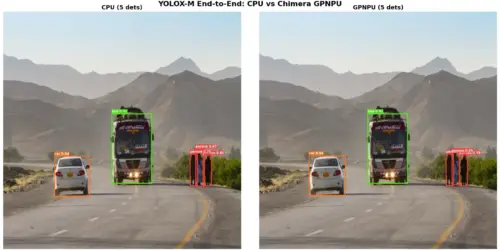
This blog post was originally published at Quadric’s website. It is reprinted here with the permission of Quadric. The ChiPy DSL is Quadric’s Python framework for building complete on-chip pipelines. Using YOLOX-M as a case study, we show how backbone inference, box decoding, and NMS run entirely on the Chimera GPNPU — no host CPU intervention,

ChiPy: Bridge Neural Networks and C++ on Silicon — Full Inference Pipelines with Zero CPU Round-Trips Read More +

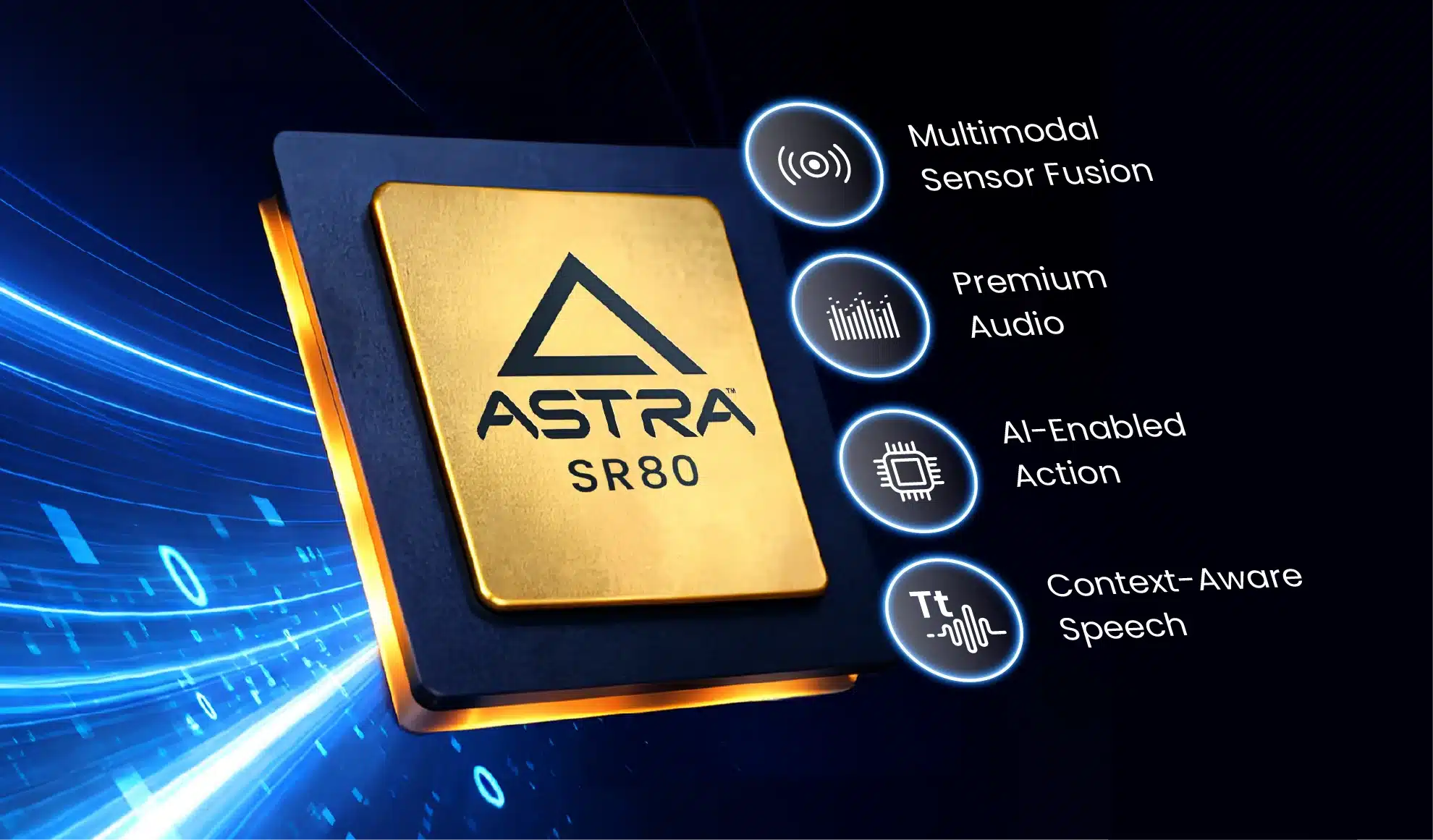
The New Baseline for Human-Centric Devices Starts with Always-On Edge AI Audio: Introducing the Synaptics® Astra™ SR80 Series

This blog post was originally published at Synaptics’ website. It is reprinted here with the permission of Synaptics. The devices we wear, carry, and live with are becoming our most personal AI companions—and that demands they be always aware, always private, and always delivering exceptional audio. The Astra™ SR80 Series delivers always-on Edge AI processing and

The New Baseline for Human-Centric Devices Starts with Always-On Edge AI Audio: Introducing the Synaptics® Astra™ SR80 Series Read More +

What is a Spatial Filter, and How Does it Enhance Depth Quality in ToF Cameras?

This blog post was originally published at e-con Systems’ website. It is reprinted here with the permission of e-con Systems. Time-of-Flight (ToF) cameras generate depth maps by measuring the phase shift between emitted near-infrared light and its reflection. Each pixel records the shift, which is then converted into distance information. But raw depth maps tend to contain

What is a Spatial Filter, and How Does it Enhance Depth Quality in ToF Cameras? Read More +

Designing with Efinix FPGA DSP Blocks

This blog post was originally published at Efinix’s website. It is reprinted here with the permission of Efinix. Today’s most advanced digital signal processing (DSP) solutions demand speed, adaptability, and precision — and that’s exactly where FPGAs (Field-Programmable Gate Arrays) shine. As a powerful hardware platform, FPGAs deliver exceptional parallel processing capability, high configurability, and

Designing with Efinix FPGA DSP Blocks Read More +

Here you’ll find a wealth of practical technical insights and expert advice to help you bring AI and visual intelligence into your products without flying blind.

Contact

Address

Berkeley Design Technology, Inc.
PO Box #4446
Walnut Creek, CA 94596

Phone
Phone: +1 (925) 954-1411
Scroll to Top