Software

Physical AI: 8 Questions Every Engineering Leader Is Asking

This blog post was originally published at Geisel Software’s website. It is reprinted here with the permission of Geisel Software. Jensen Huang called it at CES 2025: “The next frontier of AI is physical.” Since then, the phrase has been everywhere — in investor decks, conference keynotes, and vendor pitches. But for the software engineering managers, directors, VPs, and […]

Physical AI: 8 Questions Every Engineering Leader Is Asking Read More +

Airy3D Announces Support for MediaTek Genio SoCs for Edge 3D Vision Applications

Montreal, Canada – May 11, 2026 – Airy3D today announced that its DepthIQ™ SDK is supported on the MediaTek Genio Series of System-on-Chips, enabling compact and cost-efficient passive 3D vision solutions for embedded AI vision applications across robotics, industrial, retail, and smart devices. Airy3D’s DepthIQ technology enables simultaneous capture of high-quality 2D images and depth

Airy3D Announces Support for MediaTek Genio SoCs for Edge 3D Vision Applications Read More +

Face Super Resolution for Better Video Experiences

This blog post was originally published at Visidon’s website. It is reprinted here with the permission of Visidon. Video has become the primary medium for communication — from hybrid meetings to live events and social media. At the same time, expectations have risen. Faces need to look sharp, expressive, and natural — even when captured from

Face Super Resolution for Better Video Experiences Read More +

Case Study: How an Enterprise Tech Team Went from Dozens to 2,000+ Fine-Tuning Configurations

This blog post was originally published in expanded form at RapidFire AI’s website. It is reprinted here with the permission of RapidFire AI. The Use Case An AI-forward team at a Fortune 500 enterprise tech company builds intelligent autocomplete for enterprise form data entry: predicting what a user will select next across product dimensions, pricing fields,

Case Study: How an Enterprise Tech Team Went from Dozens to 2,000+ Fine-Tuning Configurations Read More +

Physical AI: From ST Sensors to a Robotics Platform, How Innovation Can Only Happen Through Collaboration

This blog post was originally published at STMicroelectronics’s website. It is reprinted here with the permission of STMicroelectronics. As technology aims to enable Physical AI, ST is sharing today how collaboration brought our sensors into a Holoscan Sensor Bridge module from Leopard Imaging, enabling developers to feed multi-modal sensing data to the NVIDIA Jetson Thor or

Physical AI: From ST Sensors to a Robotics Platform, How Innovation Can Only Happen Through Collaboration Read More +

How We Built a 100% Effective Multi-Layer Safety Filter for Enterprise AI Agents

How Rapidflare’s multi-layer safety filter achieved 100% protection against harmful content while maintaining zero false positives on legitimate queries.   This blog post was originally published at Rapidflare’s website. It is reprinted here with the permission of Rapidflare. When you deploy an AI agent to a public developer community, the threat model changes completely. In a

How We Built a 100% Effective Multi-Layer Safety Filter for Enterprise AI Agents Read More +

Beyond the Bench: Reinventing Embedded Hardware with Grinn

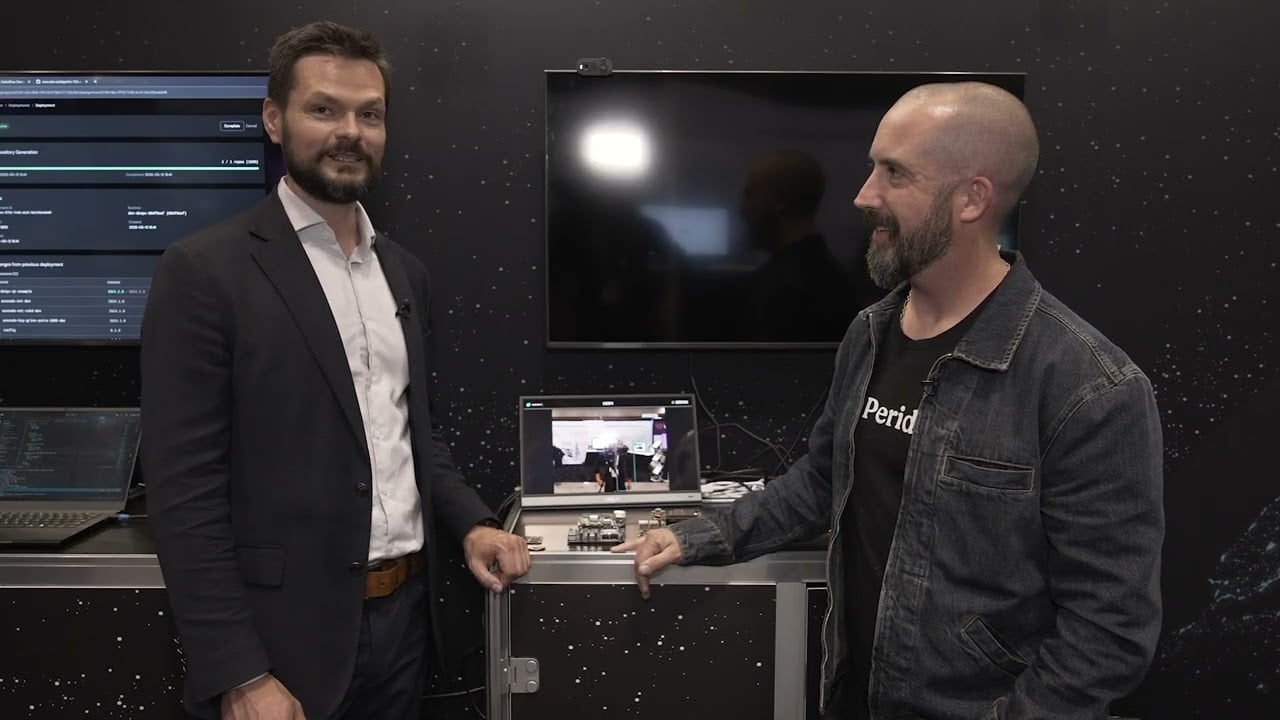
This video was originally published at Peridio’s website. It is reprinted here with the permission of Peridio. In this episode of Beyond the Bench from Peridio, Bill Brock sits down with Robert Otręba, Founder & CEO of Grinn, a Poland-based embedded engineering company operating for nearly 18 years. Robert shares how Grinn grew from a two-person

Beyond the Bench: Reinventing Embedded Hardware with Grinn Read More +

MPEG-5 LCEVC: A practical shift for industrial AI video pipelines

This blog post was originally published at V-Nova’s website. It is reprinted here with the permission of V-Nova. In Industrial and Defense environments, I hear the same story. More cameras. Higher resolutions. Stricter latency targets. Infrastructure that cannot be replaced easily. And increasing pressure around storage, bandwidth, compute, and privacy. This is why MPEG-5 LCEVC is becoming even more relevant. It improves compression

MPEG-5 LCEVC: A practical shift for industrial AI video pipelines Read More +

Key Trends Shaping the Semiconductor Industry in 2026

This blog post was originally published at HTEC’s website. It is reprinted here with the permission of HTEC.   The hardware boom is slowing down. What comes next is a software, power, and inference problem—and most of the industry isn’t ready for any of it. AI chips are now 0.2% of all chips manufactured, but

Key Trends Shaping the Semiconductor Industry in 2026 Read More +

Texas Instruments, D3 Embedded, Lattice and NVIDIA Show a Practical Radar-Camera Fusion Stack for Robotics

TI’s new application brief and companion demo outline how mmWave radar, camera input, FPGA-based sensor bridging and NVIDIA Holoscan can be combined into a low-latency perception pipeline for humanoids and other autonomous machines.   Texas Instruments, D3 Embedded, Lattice Semiconductor and NVIDIA are outlining a concrete radar-camera fusion stack for robotics rather than just talking

Texas Instruments, D3 Embedded, Lattice and NVIDIA Show a Practical Radar-Camera Fusion Stack for Robotics Read More +

Here you’ll find a wealth of practical technical insights and expert advice to help you bring AI and visual intelligence into your products without flying blind.

Contact

Address

Berkeley Design Technology, Inc.
PO Box #4446
Walnut Creek, CA 94596

Phone
Phone: +1 (925) 954-1411
Scroll to Top