Robotics

Physical AI: Bridging Silicon, Software, and the Real World

This blog post was originally published at Synopsys’s website. It is reprinted here with the permission of Synopsys.   AI is quickly emerging from its digital confines as something new: physical AI. This evolving incarnation pushes beyond the realm of information — code, text, images, video — and enables machines to sense, decide, and act in the […]

Physical AI: Bridging Silicon, Software, and the Real World Read More +
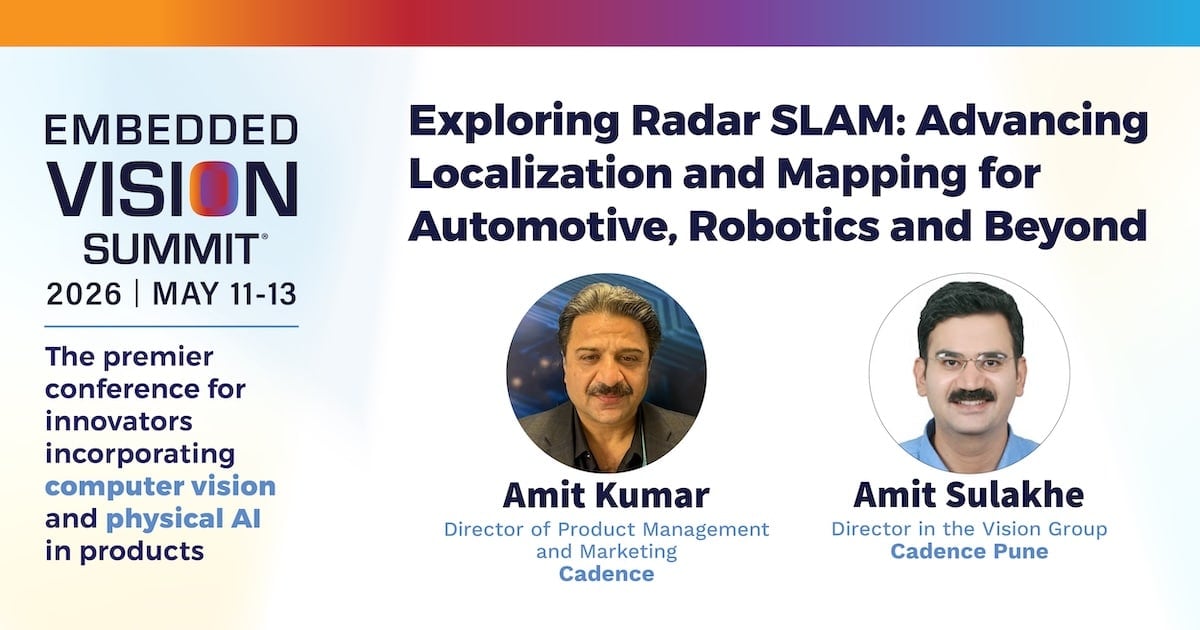
“Exploring Radar SLAM: Advancing Localization and Mapping for Automotive, Robotics and Beyond,” a Presentation from Cadence

Amit Kumar, Director of Product Management and Marketing at Cadence and Amit Sulakhe, Director in the Vision Group at Cadence Pune present “Exploring Radar SLAM: Advancing Localization and Mapping for Automotive, Robotics and Beyond” at the May 2026 Embedded Vision Summit. Reliable localization and mapping are foundational for autonomous vehicles… “Exploring Radar SLAM: Advancing Localization

“Exploring Radar SLAM: Advancing Localization and Mapping for Automotive, Robotics and Beyond,” a Presentation from Cadence Read More +

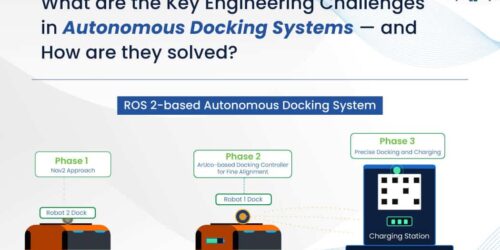
What are the Key Engineering Challenges in Autonomous Docking Systems and How are they Solved? (Part 2)

This blog post was originally published at e-con Systems’ website. It is reprinted here with the permission of e-con Systems. Designing an ROS 2-based autonomous docking system is only half the story. Deploying it in the real world is another matter entirely. Since real industrial environments don’t cooperate with textbook assumptions, understanding these challenges will help

What are the Key Engineering Challenges in Autonomous Docking Systems and How are they Solved? (Part 2) Read More +

Seeing the Invisible: How Advanced AFEs Give Robots True Self Awareness

This blog post was originally published at NXP Semiconductors’ website. It is reprinted here with the permission of NXP Semiconductors. If cameras, LiDAR and IMUs are a robot’s eyes and inner ear, then precision analog measurement is its “sense of self”, the quiet awareness of currents, strains and temperatures that tell you how the machine

Seeing the Invisible: How Advanced AFEs Give Robots True Self Awareness Read More +

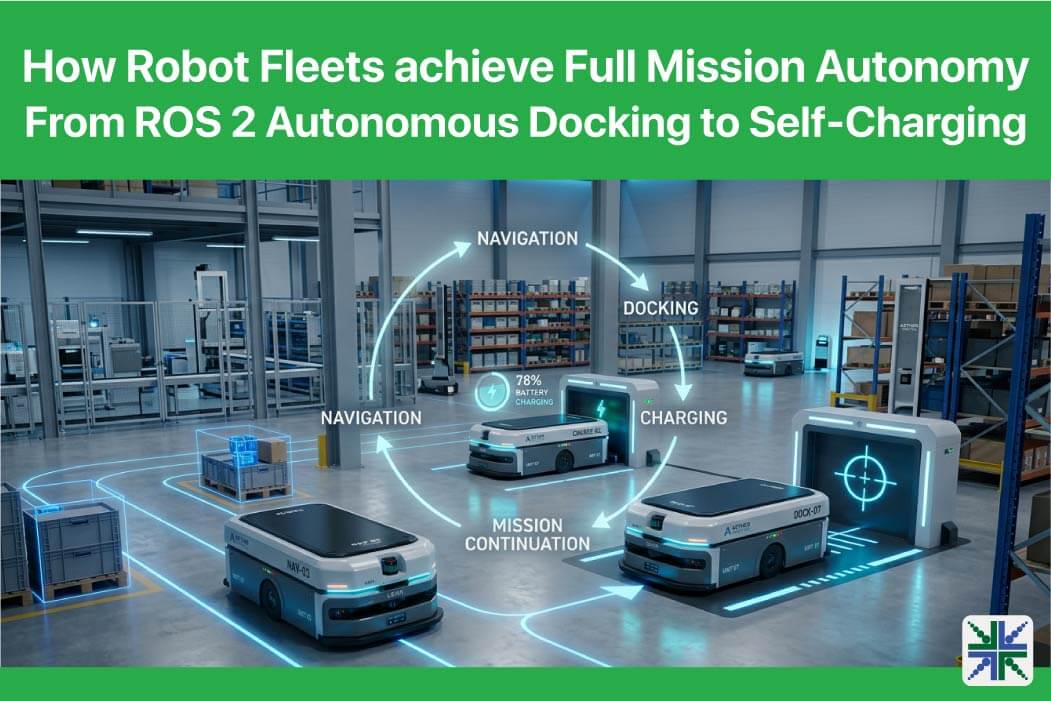
How Robot Fleets achieve Full Mission Autonomy – From ROS 2 Autonomous Docking to Self-Charging (Part 1)

This blog post was originally published at e-con Systems’ website. It is reprinted here with the permission of e-con Systems. True operational autonomy requires more than mapping since robots have stringent expectations to meet. They must manage their own energy, return to charge when needed, and resume their missions without human intervention. e-con Systems has developed

How Robot Fleets achieve Full Mission Autonomy – From ROS 2 Autonomous Docking to Self-Charging (Part 1) Read More +

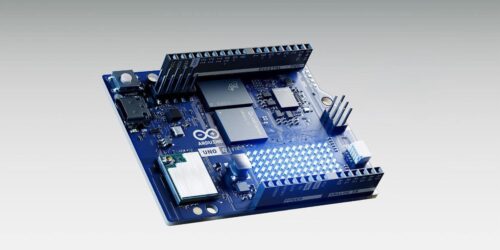
The Arduino UNO Q Board: Unpack the Dual-Brain Power for Next-Gen Edge AI

This blog post was originally published at Qualcomm’s website. It is reprinted here with the permission of Qualcomm. Get ready to reimagine what’s possible with Arduino! The new Arduino® UNO Q is shaking things up by bringing a powerful, dual-brain approach to your IoT development. This board is an approachable starting point for beginner robotics, sensor integration, local

The Arduino UNO Q Board: Unpack the Dual-Brain Power for Next-Gen Edge AI Read More +

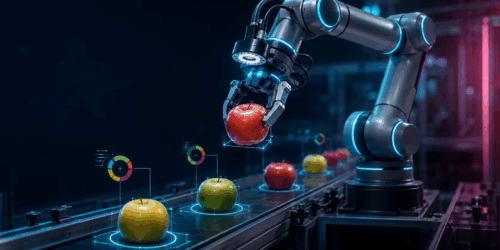
How Robotic Color Sorting Works: Vision, Classification, and Motion Control from Camera to Gripper.

This blog post was originally published at Geisel Software’s website. It is reprinted here with the permission of Geisel Software.   Sorting apples by color sounds simple enough. In fact, it is the kind of project that often produces an impressive demo in a matter of hours. Put a camera above a conveyor, detect red apples,

How Robotic Color Sorting Works: Vision, Classification, and Motion Control from Camera to Gripper. Read More +

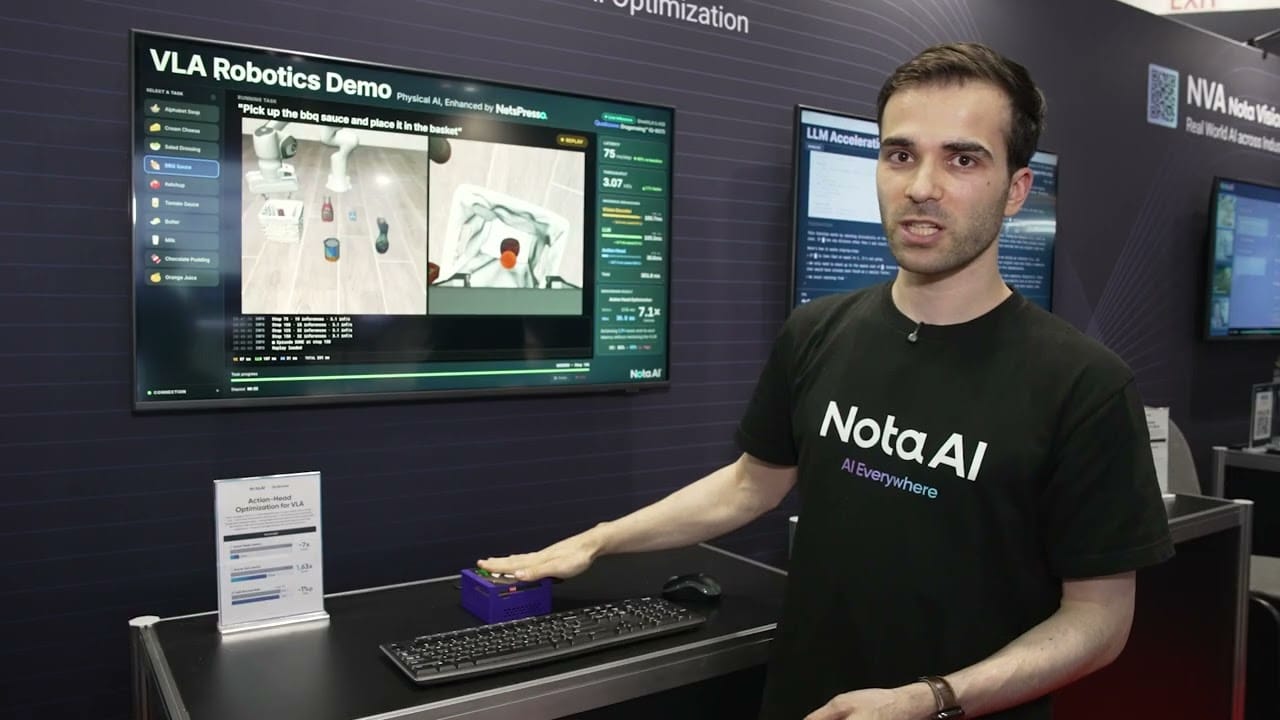
Nota AI Demonstration of VLA Robotics on Dragonwing, Enhanced by NetsPresso

Thibault Castells, Research Engineer at Nota AI, demonstrates the company’s latest edge AI and vision technologies at the 2026 Embedded Vision Summit. Specifically, he demonstrates VLA optimization on Qualcomm Dragonwing IQ-9075, powered by NetsPresso. Using an Action Head-only optimization approach, Nota AI achieves 7x faster Action Head speed (218ms → 31ms) and 1.6x faster end-to-end

Nota AI Demonstration of VLA Robotics on Dragonwing, Enhanced by NetsPresso Read More +

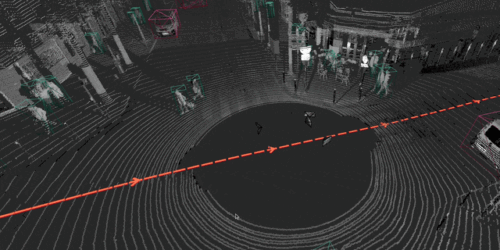
NCore: An Open-Source Multi-Sensor Data Platform for Neural 3D Reconstruction and Physical AI

NCore’s interactive 3D viewer showing camera frustums with images, lidar point clouds, 3D cuboid bounding boxes, and rig trajectory from an autonomous vehicle sequence.   This blog post was originally published at NVIDIA’s website. It is reprinted here with the permission of NVIDIA. Autonomous vehicles, robotics, and broader physical AI research all depend on multi-sensor recordings—cameras,

NCore: An Open-Source Multi-Sensor Data Platform for Neural 3D Reconstruction and Physical AI Read More +

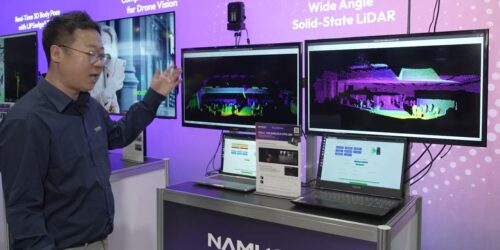
NAMUGA Demonstration of the Stella120 and 180 – Wide-Angle Solid-State LiDAR Modules

Arthur You, Global Sales Manager at NAMUGA, demonstrates the company’s LiDAR: Stella120 and 180 wide-angle solid-state LiDAR modules at the 2026 Embedded Vision Summit. The demonstration showcases long-range sensing capabilities, wide field-of-view coverage and high-resolution environmental perception enabled by NAMUGA’s solid-state LiDAR technology. Designed for next-generation robotics, smart mobility, and industrial automation applications, the modules

NAMUGA Demonstration of the Stella120 and 180 – Wide-Angle Solid-State LiDAR Modules Read More +

Here you’ll find a wealth of practical technical insights and expert advice to help you bring AI and visual intelligence into your products without flying blind.

Contact

Address

Berkeley Design Technology, Inc.
PO Box #4446
Walnut Creek, CA 94596

Phone
Phone: +1 (925) 954-1411
Scroll to Top