PROVIDER

What is Signal-to-Noise Ratio (SNR), and Why is It Important in Embedded Cameras?

This blog post was originally published at e-con Systems’ website. It is reprinted here with the permission of e-con Systems. Signal-to-Noise Ratio (SNR) measures the strength of the desired signal relative to the background noise. Demystify how SNR is calculated and develop an understanding of the practical steps to improve SNR. Signal-to-Noise Ratio (SNR) probably […]

What is Signal-to-Noise Ratio (SNR), and Why is It Important in Embedded Cameras? Read More +
From DALL·E to Stable Diffusion: How Do Text-to-Image Generation Models Work?

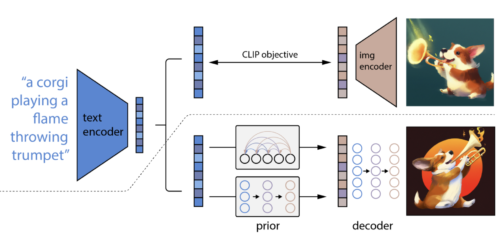
This article was originally published at Tryolabs’ website. It is reprinted here with the permission of Tryolabs. The machine learning community lost its mind when OpenAI released DALL·E in early 2021. Previous years had seen a lot of progress in models that could generate increasingly better (and more realistic) images given a written caption, but

From DALL·E to Stable Diffusion: How Do Text-to-Image Generation Models Work? Read More +

World’s Fastest Inference Engine Now Supports LSTM-based Recurrent Neural Networks

This blog post was originally published at Plumerai’s website. It is reprinted here with the permission of Plumerai. At Plumerai we enable our customers to perform increasingly complex AI tasks on tiny embedded hardware. We recently observed that more and more of such tasks are using recurrent neural networks (RNNs), in particular RNNs using the

World’s Fastest Inference Engine Now Supports LSTM-based Recurrent Neural Networks Read More +

10 Reasons to Use a LiDAR Software Pre-processor

This blog post was originally published by Outsight. It is reprinted here with the permission of Outsight. A 3D LiDAR Pre-processor turns RAW data into actionable information Running in real-time, LiDAR pre-processing software takes raw 3D data as an input and instantly converts it to accessible, actionable insight. Take a look at our previous post

10 Reasons to Use a LiDAR Software Pre-processor Read More +

Edge AI and Vision Insights: January 11, 2023 Edition

LETTER FROM THE EDITOR Dear Colleague, Welcome to 2023! The Alliance thanks you for your support this past year and wishes you the very best for the coming year. Registration is now open for the 2023 Embedded Vision Summit, coming up May 22-25 in Santa Clara, California! The Summit is the premier conference and tradeshow

Edge AI and Vision Insights: January 11, 2023 Edition Read More +

Free Webinar Explores the Opportunities for Short-wave Infrared Imaging

On March 2, 2023 at 9 am PT (noon ET), Axel Clouet, Ph.D., technology and market analyst at the Yole Group, will present the free hour webinar “Short-wave Infrared: The Dawn of a New Imaging Age?,” organized by the Edge AI and Vision Alliance. Here’s the description, from the event registration page: “Short wave” refers

Free Webinar Explores the Opportunities for Short-wave Infrared Imaging Read More +

Free Webinar: Real-time Angle Measurement in Sheet Metal Bending

January 10, 2022 – Vision Components will host two webinars on 24 January, demonstrating the operation and integration of autonomous angle measurement in metal processing. Thanks to the integrated processor, the sensor directly outputs the workpiece angle in degrees. The free-of-charge webinars are aimed in particular at manufacturers and distributors of press brakes and metal

Free Webinar: Real-time Angle Measurement in Sheet Metal Bending Read More +

Teledyne e2v Releases Hydra3D+, the First High Resolution ToF Sensor to Work in All Light Conditions Without Motion Artifacts

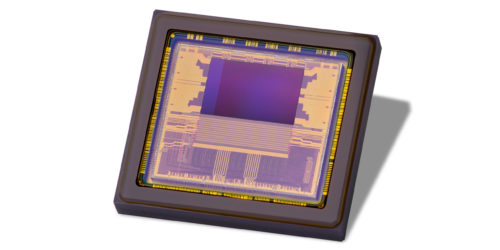
Grenoble, FRANCE, 10th January, 2023 — Teledyne e2v, a part of Teledyne Technologies [NYSE: TDY] announces the release of its Hydra3D+, a new Time-of-Flight (ToF) CMOS image sensor which incorporates 832 x 600 pixel resolution and is tailored for versatile 3D detection and measurement. Designed with Teledyne e2v’s proprietary CMOS technology, Hydra3D+ features a brand-new

Teledyne e2v Releases Hydra3D+, the First High Resolution ToF Sensor to Work in All Light Conditions Without Motion Artifacts Read More +

Perceive Launches Ergo 2 AI Processor with Unmatched Combination of Performance and Power Efficiency

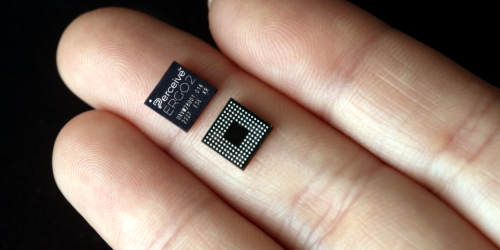
Ergo 2 enables even larger, more complex neural networks inside edge devices, including transformer networks for language and imaging, while drawing less than 100 milliwatts of compute power January 3, 2023 – Today, Perceive® unveiled a faster, more powerful addition to the Ergo® product line. The new Ergo 2 AI processor provides the performance needed

Perceive Launches Ergo 2 AI Processor with Unmatched Combination of Performance and Power Efficiency Read More +

NXP’s New i.MX 95 Family of Applications Processors Delivers Safe, Secure and Scalable AI-enabled Edge Platforms

The i.MX 95 family combines multi-core high performance compute, immersive 3D graphics and an integrated NXP eIQ® Neutron Neural Processing Unit (NPU) to enable machine learning and advanced edge applications across automotive, industrial and IoT applications Part of the NXP SafeAssure® portfolio, the i.MX 95 family’s advanced heterogeneous domain design powers safety-enabled platforms with integrated

NXP’s New i.MX 95 Family of Applications Processors Delivers Safe, Secure and Scalable AI-enabled Edge Platforms Read More +

Here you’ll find a wealth of practical technical insights and expert advice to help you bring AI and visual intelligence into your products without flying blind.

Contact

Address

Berkeley Design Technology, Inc.
PO Box #4446
Walnut Creek, CA 94596

Phone
Phone: +1 (925) 954-1411
Scroll to Top