
PROVIDER

NVIDIA Opens Portals to World of Robotics With New Omniverse Libraries, Cosmos Physical AI Models and AI Computing Infrastructure

New NVIDIA Omniverse NuRec 3D Gaussian Splatting Libraries Enable Large-Scale World Reconstruction New NVIDIA Cosmos Models Enable World Generation and Spatial Reasoning New NVIDIA RTX PRO Blackwell Servers and NVIDIA DGX Cloud Let Developers Run the Most Demanding Simulations Anywhere Physical AI Leaders Amazon Devices & Services, Boston Dynamics, Figure AI and Hexagon Embrace Simulation and Synthetic Data Generation August 11, 2025—SIGGRAPH—NVIDIA […]

NVIDIA Opens Portals to World of Robotics With New Omniverse Libraries, Cosmos Physical AI Models and AI Computing Infrastructure Read More +

Collaborating With Robots: How AI Is Enabling the Next Generation of Cobots

This blog post was originally published at Ambarella’s website. It is reprinted here with the permission of Ambarella. Collaborative robots, or cobots, are reshaping how we interact with machines. Designed to operate safely in shared environments, AI-enabled cobots are now embedded across manufacturing, logistics, healthcare, and even the home. But their role goes beyond automation—they

Collaborating With Robots: How AI Is Enabling the Next Generation of Cobots Read More +

“Simplifying Portable Computer Vision with OpenVX 2.0,” a Presentation from AMD

Kiriti Nagesh Gowda, Staff Engineer at AMD, presents the “Simplifying Portable Computer Vision with OpenVX 2.0” tutorial at the May 2025 Embedded Vision Summit. The Khronos OpenVX API offers a set of optimized primitives for low-level image processing, computer vision and neural network operators. It provides a simple method for writing optimized code that is

“Simplifying Portable Computer Vision with OpenVX 2.0,” a Presentation from AMD Read More +

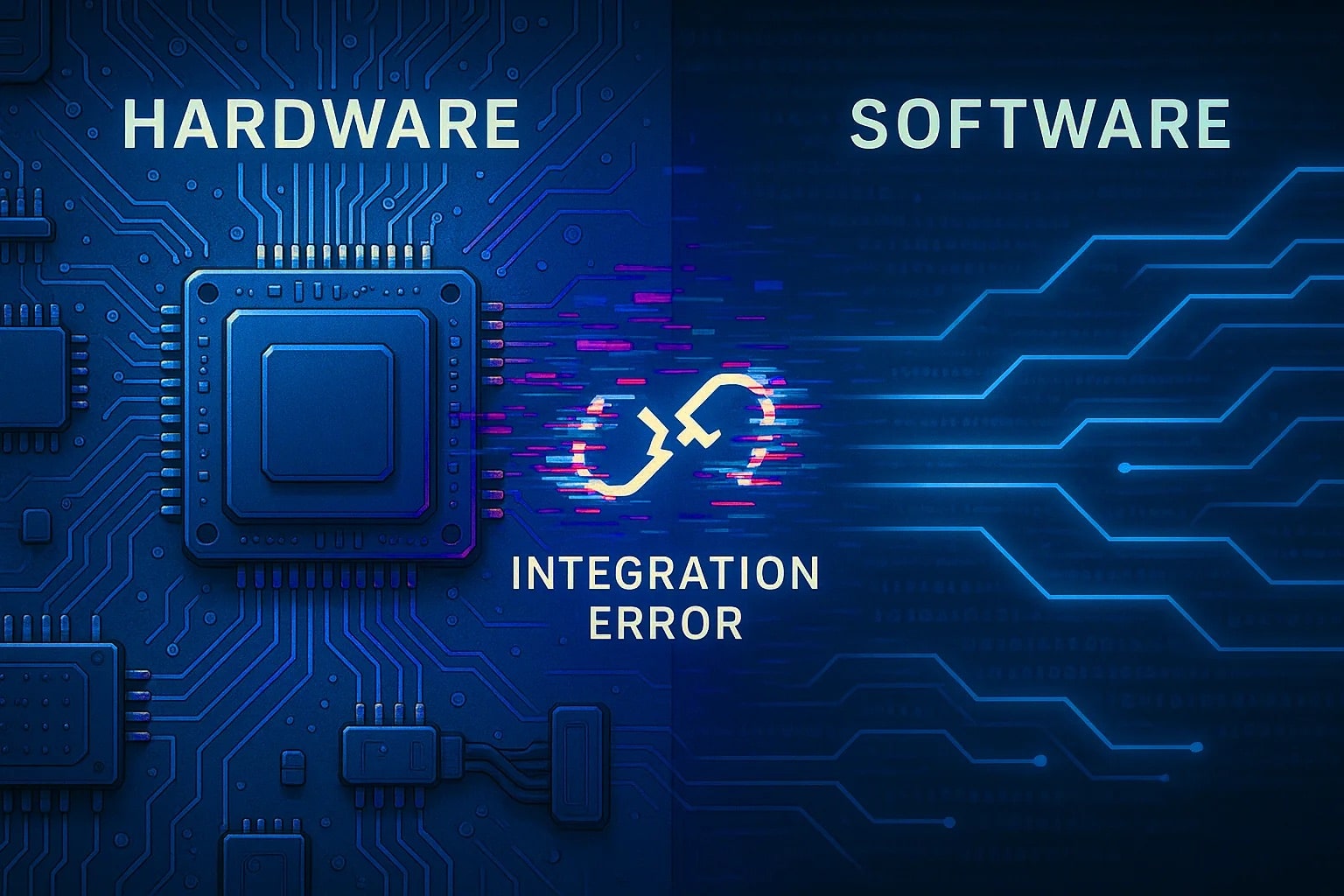
The $2.4 Trillion Crisis: Why Hardware/Software Integration Is Your Most Critical Technical Decision

This blog post was originally published at Geisel Software’s website. It is reprinted here with the permission of Geisel Software. Hardware-software integration isn’t incidental; it can make or break your project. When hardware and software don’t evolve together, even small disconnects can derail timelines, budgets, and trust. Late-stage fixes cost exponentially more. A bug caught

The $2.4 Trillion Crisis: Why Hardware/Software Integration Is Your Most Critical Technical Decision Read More +

“Quantization Techniques for Efficient Deployment of Large Language Models: A Comprehensive Review,” a Presentation from AMD

Dwith Chenna, MTS Product Engineer for AI Inference at AMD, presents the “Quantization Techniques for Efficient Deployment of Large Language Models: A Comprehensive Review” tutorial at the May 2025 Embedded Vision Summit. The deployment of large language models (LLMs) in resource-constrained environments is challenging due to the significant computational and memory demands of these models.

“Quantization Techniques for Efficient Deployment of Large Language Models: A Comprehensive Review,” a Presentation from AMD Read More +

Learn to Optimize Stable Diffusion on Qualcomm Cloud AI 100

This blog post was originally published at Qualcomm’s website. It is reprinted here with the permission of Qualcomm. Dive in to learn how we achieve a 1.4x latency decrease on Qualcomm Cloud AI 100 Ultra accelerators by applying an innovative DeepCache technique to text-to-image generation. What’s more, the throughput can be further improved by 3x

Learn to Optimize Stable Diffusion on Qualcomm Cloud AI 100 Read More +

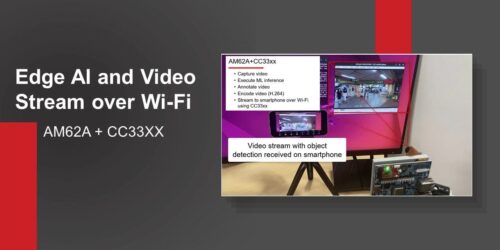
Texas Instruments Demonstration of Edge AI Inference and Video Streaming Over Wi-Fi

The demonstration shows how to use Texas Instruments’ AM6xA to capture live video, perform machine learning, and stream video over Wi-Fi. The video is encoded with H.264/H.265, and streamed via UDP over Wi-Fi using the CC33xx. At the receiver side, the video is decoded and displayed on a screen.  The receiver side could be a

Texas Instruments Demonstration of Edge AI Inference and Video Streaming Over Wi-Fi Read More +

“Introduction to Data Types for AI: Trade-offs and Trends,” a Presentation from Synopsys

Joep Boonstra, Synopsys Scientist at Synopsys, presents the “Introduction to Data Types for AI: Trade-offs and Trends” tutorial at the May 2025 Embedded Vision Summit. The increasing complexity of AI models has led to a growing need for efficient data storage and processing. One critical way to gain efficiency is using smaller and simpler data

“Introduction to Data Types for AI: Trade-offs and Trends,” a Presentation from Synopsys Read More +

Edge AI and Vision Insights: August 6, 2025

NEW PROCESSORS ENABLE ULTRA-EFFICIENT EDGE INFERENCE Key Requirements to Successfully Implement Generative AI in Edge Devices: Optimized Mapping to the Enhanced NPX6 Neural Processing Unit IP In this 2025 Embedded Vision Summit talk, Gordon Cooper, Principal Product Manager at Synopsys, discusses emerging trends in generative AI for edge devices and the key role of transformer-based

Edge AI and Vision Insights: August 6, 2025 Read More +

The Role of Embedded Cameras in Ensuring Perimeter Security

This blog post was originally published at e-con Systems’ website. It is reprinted here with the permission of e-con Systems. Any breach along the perimeter, from industrial plants to data centers, results in major threats. That’s why embedded vision is so important. Discover how cameras work in these systems, their must-have features, as well as

The Role of Embedded Cameras in Ensuring Perimeter Security Read More +

Here you’ll find a wealth of practical technical insights and expert advice to help you bring AI and visual intelligence into your products without flying blind.

Contact

Address

Berkeley Design Technology, Inc.
PO Box #4446
Walnut Creek, CA 94596

Phone
Phone: +1 (925) 954-1411
Scroll to Top