
Tools

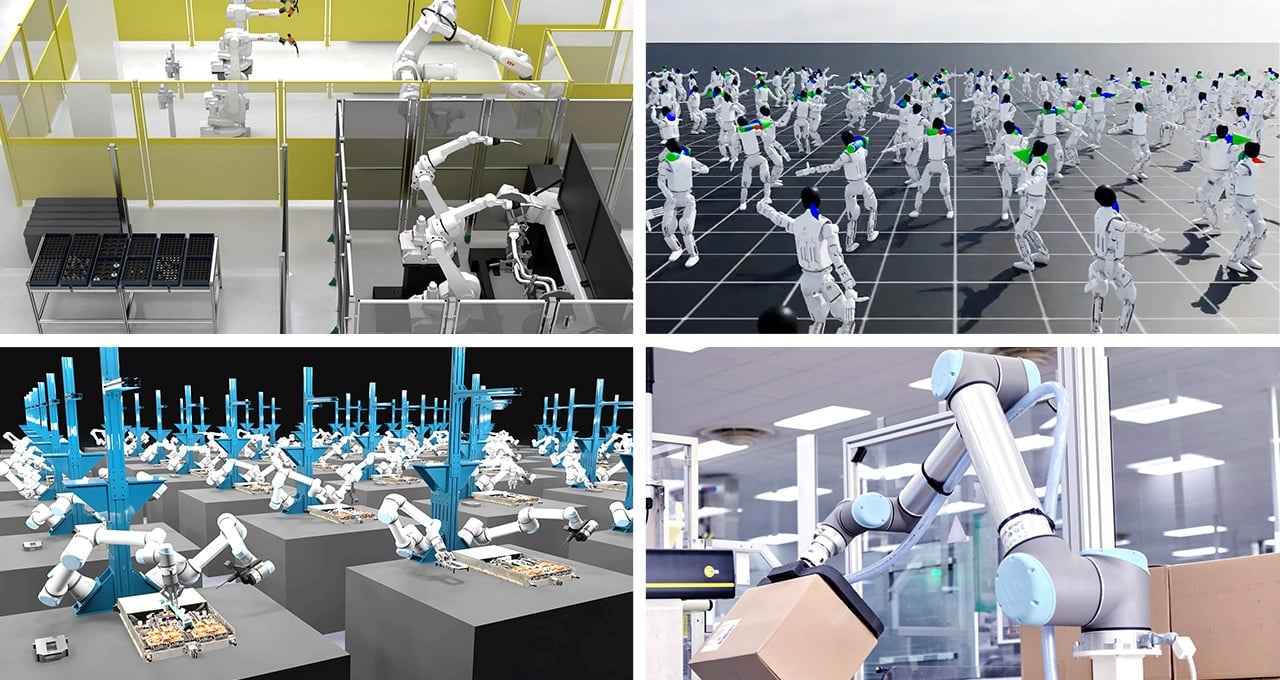
NVIDIA Advances Open Model Development for Digital and Physical AI

This blog post was originally published at NVIDIA’s website. It is reprinted here with the permission of NVIDIA. NVIDIA releases new AI tools for speech, safety and autonomous driving — including NVIDIA DRIVE Alpamayo-R1, the world’s first open industry-scale reasoning vision language action model for mobility — and a new independent benchmark recognizes the openness and […]

NVIDIA Advances Open Model Development for Digital and Physical AI Read More +

OpenVINO 2025.4 Release Broadens Model Support

OpenVINO 2025.4 is very much an edge-first release: it tightens the loop between perception, language, and action across AI PCs, embedded devices, and near-edge servers. On the model side, Intel is clearly optimizing for “local RAG + agents.” CPUs and GPUs now get first-class support for Qwen3-Embedding-0.6B and Qwen3-Reranker-0.6B, plus Mistral-Small-24B-Instruct-2501, giving developers a compact

OpenVINO 2025.4 Release Broadens Model Support Read More +

Breaking the Human Accuracy Barrier in Computer Vision Labeling

This article was originally published at 3LC’s website. It is reprinted here with the permission of 3LC. Introduction There’s been a lot of excitement lately around how foundation models (such as CLIP, SAM, Grounding DINO, etc.) can come close to human-level performance when labeling common objects, saving a ton of labeling effort and cost. It’s impressive progress. However,

Breaking the Human Accuracy Barrier in Computer Vision Labeling Read More +

NVIDIA and Synopsys Announce Strategic Partnership to Revolutionize Engineering and Design

Key Highlights Multiyear collaboration spans NVIDIA CUDA accelerated computing, agentic and physical AI, and Omniverse digital twins to achieve simulation speed and scale previously unattainable through traditional CPU computing — opening new market opportunities across engineering. To further adoption of GPU-accelerated engineering solutions, the companies will collaborate in engineering and marketing activities. NVIDIA invested $2

NVIDIA and Synopsys Announce Strategic Partnership to Revolutionize Engineering and Design Read More +

Why Edge AI Struggles Towards Production: The Deployment Problem

There is no shortage of articles about how to develop and train Edge AI models. The community has also written extensively about why it makes sense to run those models at the edge: to reduce latency, preserve privacy, and lower data-transfer costs. On top of that, the MLOps ecosystem has matured quickly, providing the pipelines

Why Edge AI Struggles Towards Production: The Deployment Problem Read More +

Nota AI Signs Technology Collaboration Agreement with Samsung Electronics for Exynos AI Optimization “Driving the Popularization of On-Device Generative AI”

Nota AI’s optimization technology integrated into Samsung Electronics’ Exynos AI Studio, enhancing efficiency in on-device AI model development   Seoul, South Korea Nov.26, 2025 — Nota AI, a company specializing in AI model compression and optimization, announced today that it has signed a collaboration agreement with Samsung Electronics’ System LSI Business to provide its AI

Nota AI Signs Technology Collaboration Agreement with Samsung Electronics for Exynos AI Optimization “Driving the Popularization of On-Device Generative AI” Read More +

Google Announces LiteRT Qualcomm AI Engine Direct Accelerator

Google has announced a new LiteRT Qualcomm AI Engine Direct Accelerator, giving Android and embedded developers a much more direct path to Qualcomm NPUs for on-device AI and vision workloads. Built on top of Qualcomm’s AI Engine Direct (“QNN”) SDK, the new accelerator replaces the older TensorFlow Lite QNN delegate and plugs directly into LiteRT,

Google Announces LiteRT Qualcomm AI Engine Direct Accelerator Read More +

Small Models, Big Heat — Conquering Korean ASR with Low-bit Whisper

This blog post was originally published at ENERZAi’ website. It is reprinted here with the permission of ENERZAi. Today, we’ll share results where we re-trained the original Whisper for optimal Korean ASR(Automatic Speech Recognition), applied Post-Training Quantization (PTQ), and provided a richer Pareto analysis so customers with different constraints and requirements can pick exactly what

Small Models, Big Heat — Conquering Korean ASR with Low-bit Whisper Read More +

Cadence Adds 10 New VIP to Strengthen Verification IP Portfolio for AI Designs

This article was originally published at Cadence’s website. It is reprinted here with the permission of Cadence. Cadence has unveiled 10 Verification IP (VIP) for key emerging interfaces tuned for AI-based designs, including Ultra Accelerator Link (UALink), Ultra Ethernet (UEC), LPDDR6, UCIe 3.0, AMBA CHI-H, Embedded USB v2 (eUSB2), and UniPro 3.0. These new VIP will

Cadence Adds 10 New VIP to Strengthen Verification IP Portfolio for AI Designs Read More +

SAM3: A New Era for Open‑Vocabulary Segmentation and Edge AI

Quality training data – especially segmented visual data – is a cornerstone of building robust vision models. Meta’s recently announced Segment Anything Model 3 (SAM3) arrives as a potential game-changer in this domain. SAM3 is a unified model that can detect, segment, and even track objects in images and videos using both text and visual

SAM3: A New Era for Open‑Vocabulary Segmentation and Edge AI Read More +

Here you’ll find a wealth of practical technical insights and expert advice to help you bring AI and visual intelligence into your products without flying blind.

Contact

Address

Berkeley Design Technology, Inc.
PO Box #4446
Walnut Creek, CA 94596

Phone
Phone: +1 (925) 954-1411
Scroll to Top