
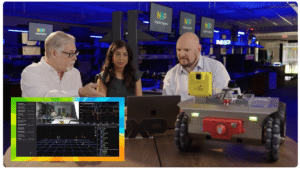
Conversations at the Edge with NXP
This blog post was originally published at Au-Zone’s website. It is reprinted here with the permission of Au-Zone. Are Single-Sensor Robots Obsolete? We think so, and we’re here to show you why. Au-Zone is proud to be featured in NXP Semiconductors’ Conversations at the Edge video series, a multi-part collaboration exploring innovation at the intersection of
TI Accelerates the Next Generation of Physical AI with NVIDIA
News highlights: TI and NVIDIA are collaborating to accelerate the path from simulation to the safe deployment of humanoid robots in the real world. As part of this collaboration, TI integrated its mmWave radar technology with NVIDIA Jetson Thor and NVIDIA Holoscan to enable low-latency 3D perception and safety awareness for physical AI applications. TI
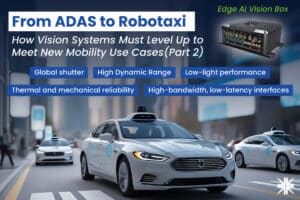
From ADAS to Robotaxi: How Vision Systems Must Level Up to Meet New Mobility Use Cases (Part 2)
This blog post was originally published at e-con Systems’ website. It is reprinted here with the permission of e-con Systems. Key Takeaways How urban lighting and motion define robotaxi imaging needs Which camera features support reliable perception during day and night operation Why unified AI vision boxes reduce latency and coordination gaps How integrated vision platforms
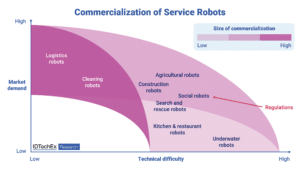
Which Service Robots Will Dominate the Market in the Next 10 Years?
Logistics robots and cleaning robots both benefit from high market demand and relatively low technical barriers, compared to kitchen and restaurant robots or underwater robots. Source: Service Robots 2026-2036: Technologies, Players and Markets This blog post was originally published at IDTechEx’s website. It is reprinted here with the permission of IDTechEx. The service robotics industry has grown
From ADAS to Robotaxi: How to Overcome the Major Vision Challenges
This blog post was originally published at e-con Systems’ website. It is reprinted here with the permission of e-con Systems. Key Takeaways Why does robotaxi vision need more than task-driven ADAS sensing? Impact of long-duty operation and changing lighting on perception reliability Challenges faced across vehicles, cities, and operating conditions How visual data continuity affects

CES 2026: Physical AI moves from concept to system architecture
This market analysis was originally published at the Yole Group’s website. It is reprinted here with the permission of the Yole Group. The world’s largest consumer electronics conference demonstrated the technical synergies between automotive and robotics. At CES 2026, there was a clear cross-sector message: Physical AI is the common language across the automotive, robotaxi

The Forest Listener: Where edge AI meets the wild
This blog post was originally published at Micron’s website. It is reprinted here with the permission of Micron. Let’s first discuss the power of enabling. Enabling a wide electronic ecosystem is essential for fostering innovation, scalability and resilience across industries. By supporting diverse hardware, software and connectivity standards, organizations can accelerate product development, reduce costs and

HCLTech unveils VisionX 2.0, a next-gen multi-modal AI Edge Platform with NVIDIA
Noida, India, February 20, 2026 — HCLTech, a leading global technology company, today unveiled VisionX 2.0, an upgraded version of its multi-modal AI edge platform. This platform delivers real-time intelligence, enhanced safety and operational efficiency at scale for mission-critical industrial environments. VisionX 2.0 builds on HCLTech’s award-winning Intelligent Secure Edge capabilities, integrating advanced computer vision, vision language

How Lenovo is scaling Level 4 autonomous robotaxis on Arm
This blog post was originally published at Arm’s website. It is reprinted here with the permission of Arm. As L4 robotaxis shift from pilot to production, Arm offers the compute foundation needed to deliver end-to-end physical AI that scales across vehicle fleets. After years of autonomous driving pilots and controlled trials, the automotive industry is moving toward the production-scale deployment of Level 4 (L4) robotaxis. This marks

What Does a GPU Have to Do With Automotive Security?
This blog post was originally published at Imagination Technologies’ website. It is reprinted here with the permission of Imagination Technologies. The automotive industry is undergoing the most significant transformation since the advent of electronics in cars. Vehicles are becoming software-defined, connected, AI-driven, and continuously updated. This evolution brings extraordinary new capability – but it also brings