
NVIDIA Introduces New Jetson Thor Computers to Advance Mainstream Robotics and Edge AI
New NVIDIA Blackwell-powered T3000 and T2000 modules, paired with new NVIDIA Jetson software memory optimization and agent skills, help partners
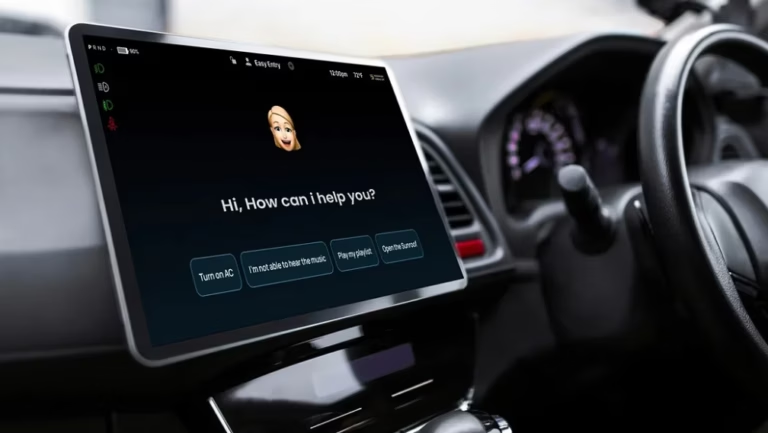
In-cabin Voice Agent at the Edge: Redefining the Drive
This blog post was originally published at ENERZAi’s website. It is reprinted here with the permission of ENERZAi. Hyundai Motor Group
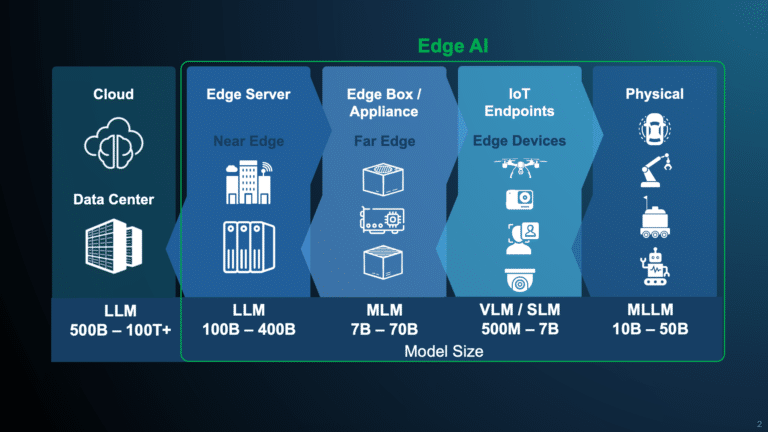
Free Webinar on Building Trustworthy Physical AI at the Edge
On September 2, 2026 at 9 am PT (noon ET), Muneyb Minhazuddin, Customer Growth Officer at Ambarella and Pietro Antonio Cicalese,

Breadth, Depth and Value: Arm Empowers Developers for the Agentic AI Era
This blog post was originally published at Arm’s website. It is reprinted here with the permission of Arm. Great hardware matters, but

VeriSilicon Introduces CPP2000 Camera Post-Processing IP for Embodied Robotics and Mobile Vision Applications
Shanghai, China, July 3, 2026–VeriSilicon (688521.SH) today announced its high-performance CPP2000 Camera Post-Processing (CPP) IP, expanding the company’s Image Signal
Microchip Advances Neural Network Implementation with VectorBlox 3.0 Accelerator SDK
Latest release leverages sparse neural networks to improve performance and enable more efficient edge AI on PolarFire® FPGAs and SoCs

Why Memory Capacity is the Real Performance Bottleneck in Agentic AI Workstations
This blog post was originally published at Micron Technology’s website. It is reprinted here with the permission of Micron Technology. As
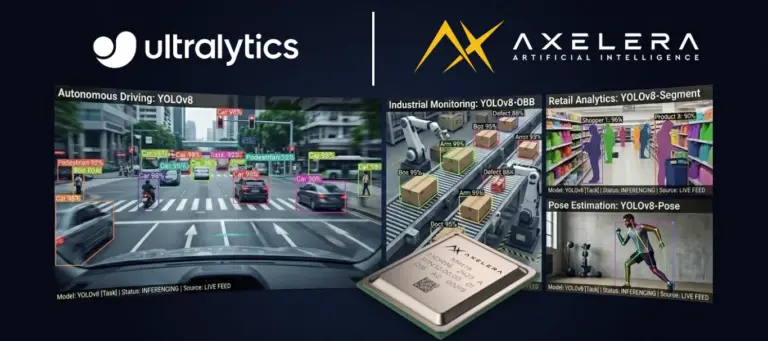
Run Ultralytics YOLO on Axelera AIPUs in Minutes
This blog post was originally published at Axelera AI’s website. It is reprinted here with the permission of Axelera AI. Trying
Microchip Expands Developer Access with Free MPLAB® XC Compilers and MPLAB Machine Learning Development Suite
CHANDLER, Ariz., July 8, 2026 — Microchip Technology (Nasdaq: MCHP) has announced that its MPLAB® XC Pro Compilers and MPLAB Machine Learning (ML) Development Suite are now available
Free Webinar on Automotive Perception in the Physical AI Era
On September 29, 2026 at 9 am PT (noon ET), Pierrick Boulay, Principal Analyst, Automotive Semiconductors, and Anas Chalak, Technology & Market Analyst, Imaging at Yole Group, will present the free hour webinar “Automotive Perception in the Physical AI Era: Imaging, Sensors and Computing,” organized by the Edge AI and Vision Alliance. Here’s the description,

BrainChip Partners with Celus to Bring Its Neuromorphic Edge AI Processor to the CELUS Design Platform
Strategic collaboration will soon give engineers direct access to BrainChip’s AKD1500 architecture through CELUS’s AI-guided design tools for device design LAGUNA HILLS, Calif. and MUNICH — July 23, 2026 — BrainChip Holdings Ltd. (ASX: BRN, OTCQX: BRCHF, ADR: BCHPY), the world’s first commercial producer of neuromorphic artificial intelligence technology, and CELUS, the industry leader in cloud-based electronics design
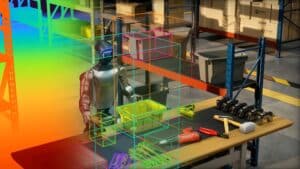
NVIDIA Agent Toolkit Expands With New Omniverse Libraries, Putting AI Agents to Work Building Simulation-Ready Worlds
News Summary: NVIDIA Agent Toolkit now includes NVIDIA Omniverse libraries, giving AI agents tools and skills to help software developers integrate physical AI capabilities into their existing applications. New Omniverse libraries for NVIDIA RTX sensor simulation, GPU-accelerated physics simulation and simulation-ready asset validation are openly available on GitHub. SideFX and PTC are integrating Omniverse libraries
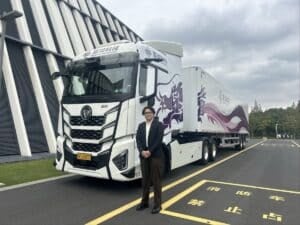
China’s Autonomous Trucks Now Log Over One Million Kilometers Daily
This blog post was originally published at IDTechEx’s website. It is reprinted here with the permission of IDTechEx. To gain deeper insights into the rapidly accelerating market for autonomous trucks in China, IDTechEx recently visited Inceptio Technology, a leading Chinese autonomous trucking company. Across the global autonomous vehicle landscape, commercial trucks are emerging as one of the first
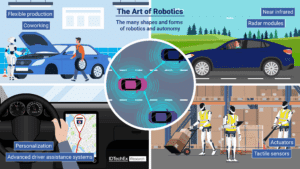
The Art of Robotics and The Growing Intellect of Autonomy
This blog post was originally published at IDTechEx’s website. It is reprinted here with the permission of IDTechEx. ‘Robotics’ takes on many different forms today, from cars pre-empting a driver’s needs and making coffee-stop decisions in their best interest, to humanoid robots operating in warehouses and cobots assisting humans in production lines. IDTechEx’s portfolio of

Semiconductor Industry 2025: Worldwide Dynamics and China’s Strategic Rise Unveiled
This market research report was originally published at the Yole Group’s website. It is reprinted here with the permission of the Yole Group. The market research & strategy consulting company, Yole Group, delivers a dual perspective on global semiconductor dynamics and China’s fast-evolving industry landscape. Key Takeaways Global semiconductor device revenues are set to reach
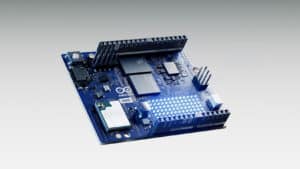
The Arduino UNO Q Board: Unpack the Dual-Brain Power for Next-Gen Edge AI
This blog post was originally published at Qualcomm’s website. It is reprinted here with the permission of Qualcomm. Get ready to reimagine what’s possible with Arduino! The new Arduino® UNO Q is shaking things up by bringing a powerful, dual-brain approach to your IoT development. This board is an approachable starting point for beginner robotics, sensor integration, local
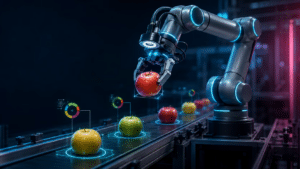
How Robotic Color Sorting Works: Vision, Classification, and Motion Control from Camera to Gripper.
This blog post was originally published at Geisel Software’s website. It is reprinted here with the permission of Geisel Software. Sorting apples by color sounds simple enough. In fact, it is the kind of project that often produces an impressive demo in a matter of hours. Put a camera above a conveyor, detect red apples,
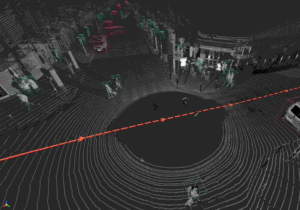
NCore: An Open-Source Multi-Sensor Data Platform for Neural 3D Reconstruction and Physical AI
NCore’s interactive 3D viewer showing camera frustums with images, lidar point clouds, 3D cuboid bounding boxes, and rig trajectory from an autonomous vehicle sequence. This blog post was originally published at NVIDIA’s website. It is reprinted here with the permission of NVIDIA. Autonomous vehicles, robotics, and broader physical AI research all depend on multi-sensor recordings—cameras,