NVIDIA

NXP Delivers New Innovations for Advanced Physical AI with NVIDIA

Key Takeaways: Secure, reliable real-time data processing and transport solutions for next-generation physical AI applications, developed in collaboration with NVIDIA NVIDIA humanoid robotics solutions integrated into NXP’s safe, secure edge portfolio cut development costs and speed time to market First in a series of NXP’s foundational robotics solutions designed to accelerate physical AI development and […]

NXP Delivers New Innovations for Advanced Physical AI with NVIDIA Read More +

TI Accelerates the Next Generation of Physical AI with NVIDIA

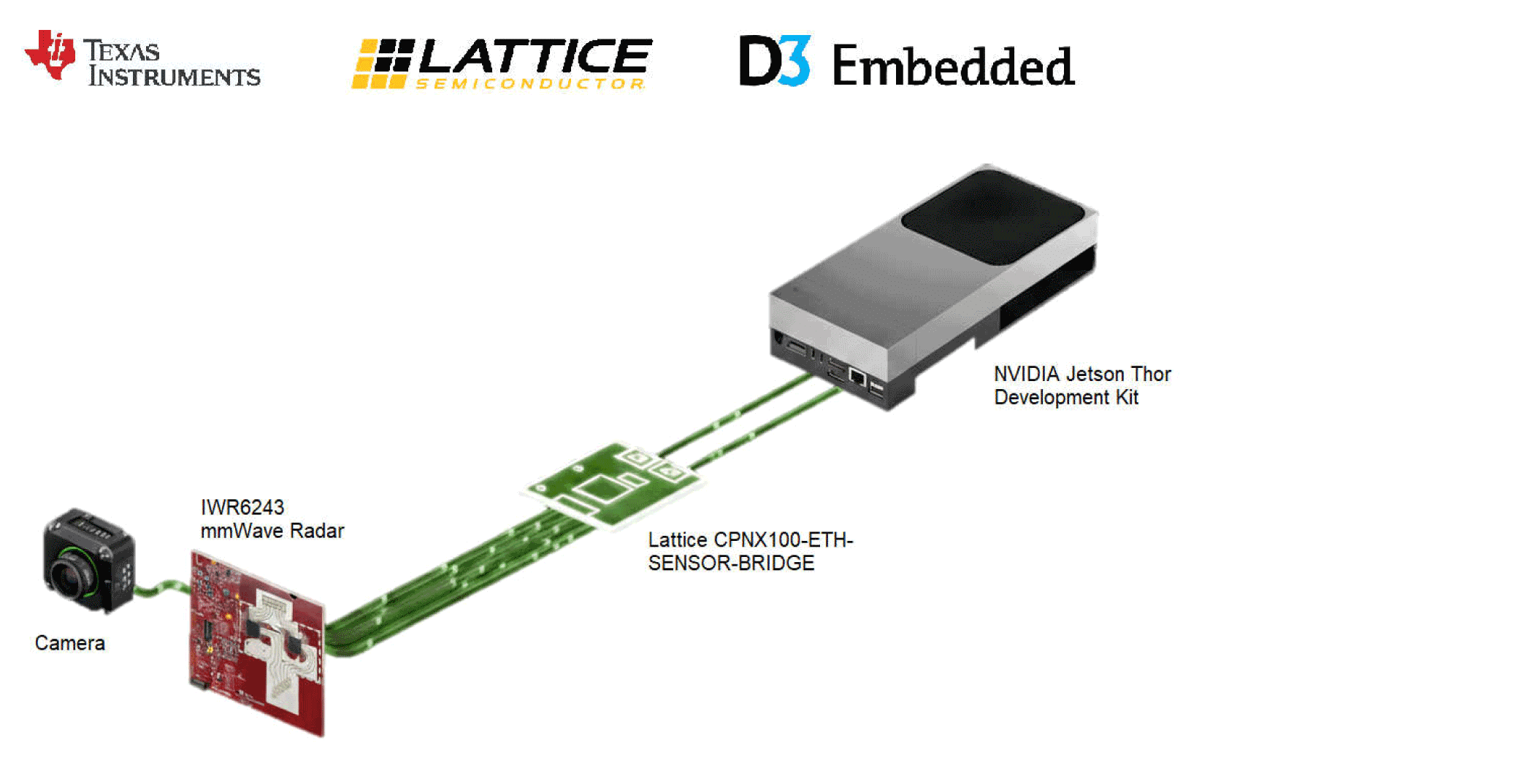
News highlights: TI and NVIDIA are collaborating to accelerate the path from simulation to the safe deployment of humanoid robots in the real world. As part of this collaboration, TI integrated its mmWave radar technology with NVIDIA Jetson Thor and NVIDIA Holoscan to enable low-latency 3D perception and safety awareness for physical AI applications. TI

TI Accelerates the Next Generation of Physical AI with NVIDIA Read More +

HCLTech unveils VisionX 2.0, a next-gen multi-modal AI Edge Platform with NVIDIA

Noida, India, February 20, 2026 — HCLTech, a leading global technology company, today unveiled VisionX 2.0, an upgraded version of its multi-modal AI edge platform. This platform delivers real-time intelligence, enhanced safety and operational efficiency at scale for mission-critical industrial environments. VisionX 2.0 builds on HCLTech’s award-winning Intelligent Secure Edge capabilities, integrating advanced computer vision, vision language

HCLTech unveils VisionX 2.0, a next-gen multi-modal AI Edge Platform with NVIDIA Read More +

How Lenovo is scaling Level 4 autonomous robotaxis on Arm

This blog post was originally published at Arm’s website. It is reprinted here with the permission of Arm. As L4 robotaxis shift from pilot to production, Arm offers the compute foundation needed to deliver end-to-end physical AI that scales across vehicle fleets. After years of autonomous driving pilots and controlled trials, the automotive industry is moving toward the production-scale deployment of Level 4 (L4) robotaxis. This marks

How Lenovo is scaling Level 4 autonomous robotaxis on Arm Read More +

Into the Omniverse: OpenUSD and NVIDIA Halos Accelerate Safety for Robotaxis, Physical AI Systems

This blog post was originally published at NVIDIA’s website. It is reprinted here with the permission of NVIDIA. NVIDIA Editor’s note: This post is part of Into the Omniverse, a series focused on how developers, 3D practitioners and enterprises can transform their workflows using the latest advancements in OpenUSD and NVIDIA Omniverse. New NVIDIA safety

Into the Omniverse: OpenUSD and NVIDIA Halos Accelerate Safety for Robotaxis, Physical AI Systems Read More +

What Sensor Fusion Architecture Offers for NVIDIA Orin NX-Based Autonomous Vision Systems

This blog post was originally published at e-con Systems’ website. It is reprinted here with the permission of e-con Systems. Key Takeaways Why multi-sensor timing drift weakens edge AI perception How GNSS-disciplined clocks align cameras, LiDAR, radar, and IMUs Role of Orin NX as a central timing authority for sensor fusion Operational gains from unified time-stamping

What Sensor Fusion Architecture Offers for NVIDIA Orin NX-Based Autonomous Vision Systems Read More +

Production Software Meets Production Hardware: Jetson Provisioning Now Available with Avocado OS

This blog post was originally published at Peridio’s website. It is reprinted here with the permission of Peridio. The gap between robotics prototypes and production deployments has always been an infrastructure problem disguised as a hardware problem. Teams build incredible computer vision models and robotic control systems on NVIDIA Jetson developer kits, only to hit

Production Software Meets Production Hardware: Jetson Provisioning Now Available with Avocado OS Read More +

Getting Started with Edge AI on NVIDIA Jetson: LLMs, VLMs, and Foundation Models for Robotics

This article was originally published at NVIDIA’s website. It is reprinted here with the permission of NVIDIA. Running advanced AI and computer vision workloads on small, power-efficient devices at the edge is a growing challenge. Robots, smart cameras, and autonomous machines need real-time intelligence to see, understand, and react without depending on the cloud. The NVIDIA

Getting Started with Edge AI on NVIDIA Jetson: LLMs, VLMs, and Foundation Models for Robotics Read More +

How to Enhance 3D Gaussian Reconstruction Quality for Simulation

This article was originally published at NVIDIA’s website. It is reprinted here with the permission of NVIDIA. Building truly photorealistic 3D environments for simulation is challenging. Even with advanced neural reconstruction methods such as 3D Gaussian Splatting (3DGS) and 3D Gaussian with Unscented Transform (3DGUT), rendered views can still contain artifacts such as blurriness, holes, or

How to Enhance 3D Gaussian Reconstruction Quality for Simulation Read More +

NVIDIA DRIVE AV Software Debuts in All-New Mercedes-Benz CLA

This post was originally published at NVIDIA’s website. It is reprinted here with the permission of NVIDIA. Production launch of enhanced level 2 driver-assistance system in the US this year signals start of broader rollout of NVIDIA’s full-stack software across the automotive industry. NVIDIA is enabling a new era of AI-defined driving, bringing its NVIDIA

NVIDIA DRIVE AV Software Debuts in All-New Mercedes-Benz CLA Read More +

Here you’ll find a wealth of practical technical insights and expert advice to help you bring AI and visual intelligence into your products without flying blind.

Contact

Address

Berkeley Design Technology, Inc.
PO Box #4446
Walnut Creek, CA 94596

Phone
Phone: +1 (925) 954-1411
Scroll to Top