PROVIDER

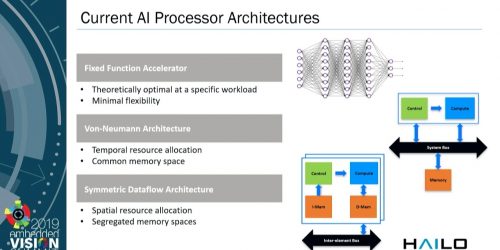
“Emerging Processor Architectures for Deep Learning: Options and Trade-offs,” a Presentation from Hailo

Orr Danon, CEO of Hailo, presents the “Emerging Processor Architectures for Deep Learning: Options and Trade-offs” tutorial at the May 2019 Embedded Vision Summit. In the past year, numerous new processor architectures for machine learning have emerged. Many of these focus on edge applications, reflecting the growing demand for deploying machine learning outside of data […]
“Emerging Processor Architectures for Deep Learning: Options and Trade-offs,” a Presentation from Hailo Read More +

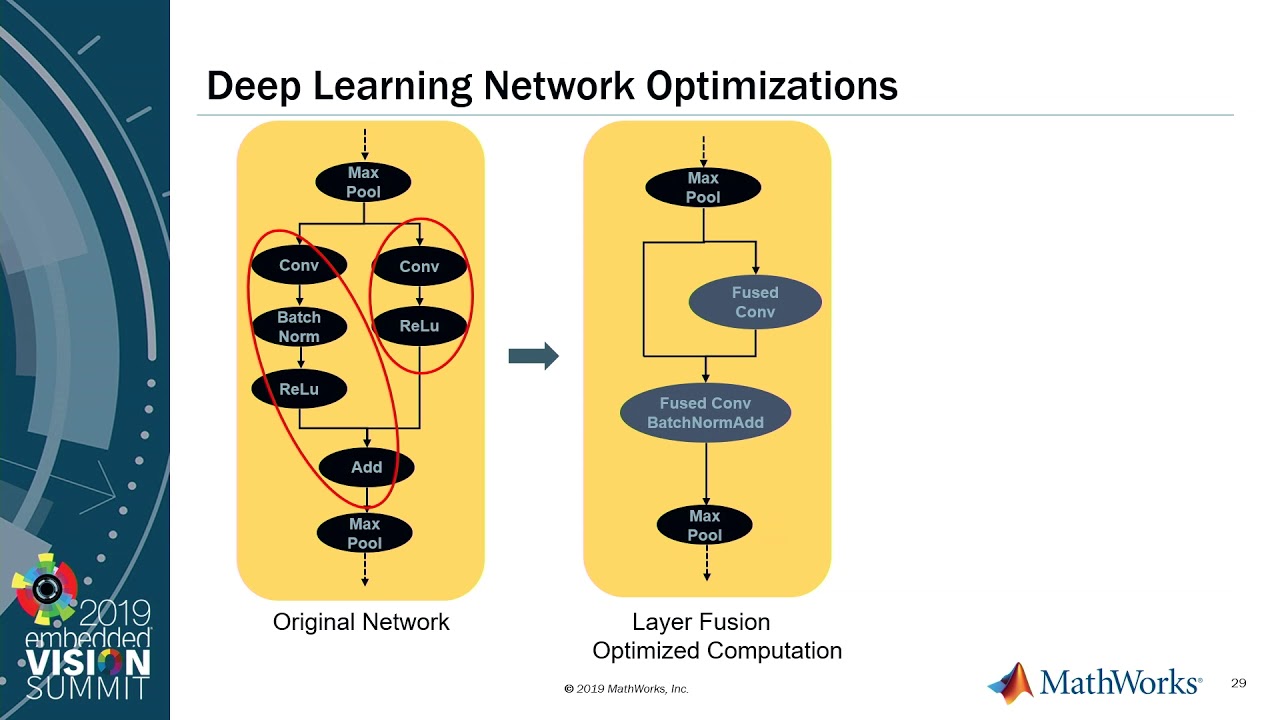
“Deploying Deep Learning Models on Embedded Processors for Autonomous Systems with MATLAB,” a Presentation from MathWorks

Sandeep Hiremath, Product Manager, and Bill Chou, Senior Computer Vision Scientist, both of MathWorks, present the "Deploying Deep Learning Models on Embedded Processors for Autonomous Systems with MATLAB" tutorial at the May 2019 Embedded Vision Summit. In this presentation, Hiremath and Chou explain how to bring the power of deep neural networks to memory- and

“Deploying Deep Learning Models on Embedded Processors for Autonomous Systems with MATLAB,” a Presentation from MathWorks Read More +

content_dam_vsd_online_articles_2019_05_cadence_tensilica_diagram_imaging_processing

Toshiba Selects Cadence Tensilica Vision P6 DSP as Image Recognition Processor for its Next-Generation ADAS Chip

Tensilica Vision P6 DSP increases performance and power efficiency compared to CPUs for vision and AI applications SAN JOSE, Calif., June 13, 2019—Cadence Design Systems, Inc. (NASDAQ: CDNS) announced today that Toshiba has implemented the Cadence® Tensilica® Vision P6 DSPs for its next-generation automotive SoC to meet functional safety requirements. The Vision P6 DSP provides

Toshiba Selects Cadence Tensilica Vision P6 DSP as Image Recognition Processor for its Next-Generation ADAS Chip Read More +

“AI-powered Identity: Evaluating Face Recognition Capabilities,” a Presentation From the University of Houston

Ioannis Kakadiaris, Distinguished University Professor of Computer Science at the University of Houston, presents the "AI-powered Identity: Evaluating Face Recognition Capabilities" tutorial at the May 2019 Embedded Vision Summit. Following the deep learning renaissance, the face recognition community has achieved remarkable results when comparing images that are both frontal and non-occluded. However, significant challenges remain

“AI-powered Identity: Evaluating Face Recognition Capabilities,” a Presentation From the University of Houston Read More +

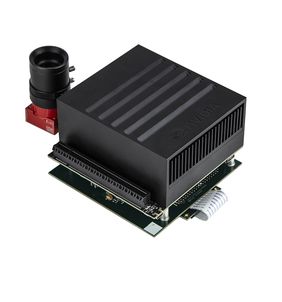
csm_Antmicros_Deeplearning_usecase_on_JetsonXavier_with_Alvium_0dd9ca3c90

Allied Vision and Antmicro Announce Partnership to Provide Joint Offering for Modular Embedded Vision and Edge AI Systems

Stadtroda, Germany, July 25, 2019 – Allied Vision, a global provider of industrial camera solutions and Antmicro, a software-driven embedded technology company developing advanced open-source based edge computing systems, have announced a strategic partnership to drive their common goals in building complex and portable vision systems. The announcement is made to underline the ongoing collaboration

Allied Vision and Antmicro Announce Partnership to Provide Joint Offering for Modular Embedded Vision and Edge AI Systems Read More +

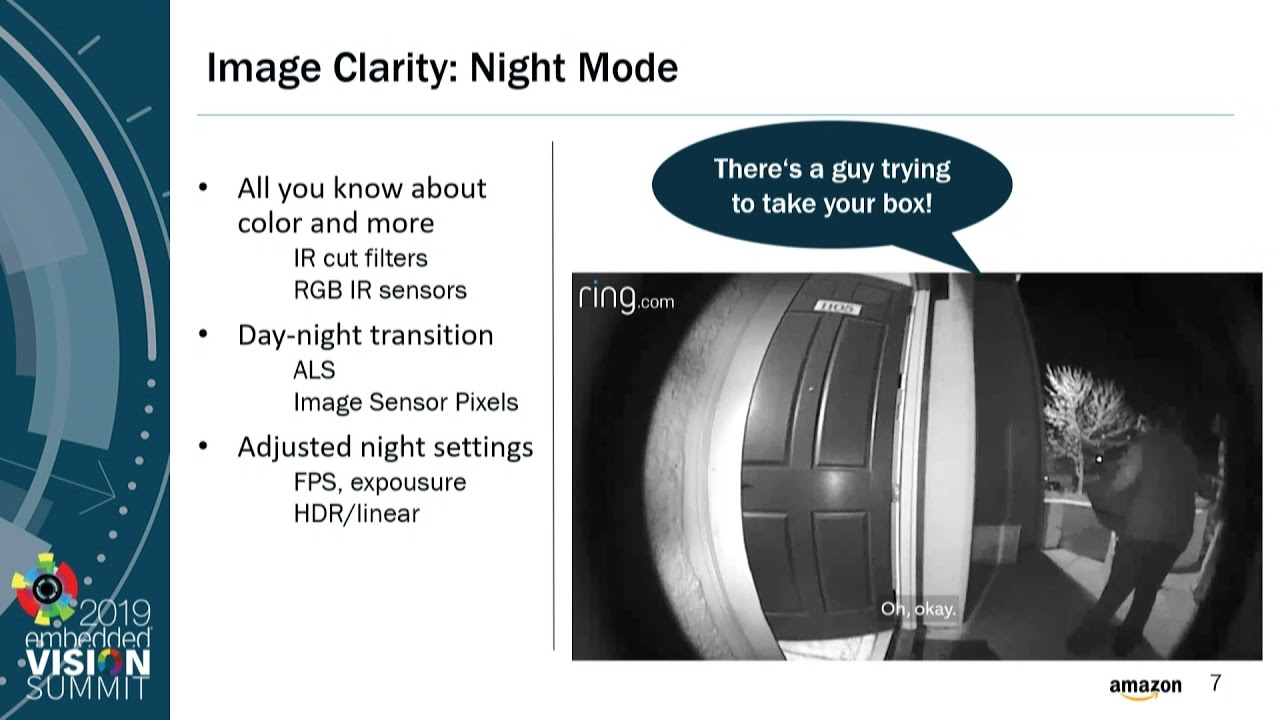
“Designing Home Monitoring Cameras for Scale,” a Presentation from Ring

Ilya Brailovskiy, Principal Engineer, and Changsoo Jeong, Head of Algorithm, both of Ring, present the "Optimizing SSD Object Detection for Low-power Devices" tutorial at the May 2019 Embedded Vision Summit. In this talk, Brailovskiy and Jeong discuss how Ring designs smart home video cameras to make neighborhoods safer. In particular, they focus on three key

“Designing Home Monitoring Cameras for Scale,” a Presentation from Ring Read More +

Algolux and Mila Enter Artificial Intelligence Research Partnership for Computer Vision

Autonomous Computer Vision Leader and AI Research Consortium to Advance Deep Learning Computer Vision Technologies Montreal, Canada – July 24, 2019 – Algolux, the leading provider of software for autonomous computer vision, has announced a research partnership with Mila, an academic research institution dedicated to advancing artificial intelligence (AI), with a strong focus on deep

Algolux and Mila Enter Artificial Intelligence Research Partnership for Computer Vision Read More +

Slide_1_2

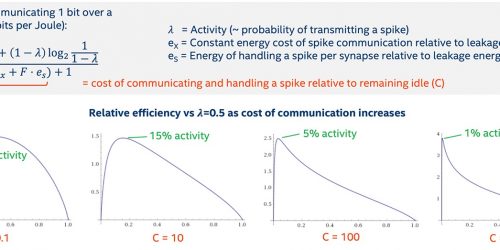
Exploring Neuromorphic Computing for AI: Why Spikes? (Part One)

This blog post was originally published at Intel's website. It is reprinted here with the permission of Intel. AI is now fast defining the next major era of computing, thanks to the pioneering work of David Rumelhart, Geoffrey Hinton, Yann LeCun, Yoshua Bengio, and many others over the past few decades. Yet ongoing progress in

Exploring Neuromorphic Computing for AI: Why Spikes? (Part One) Read More +

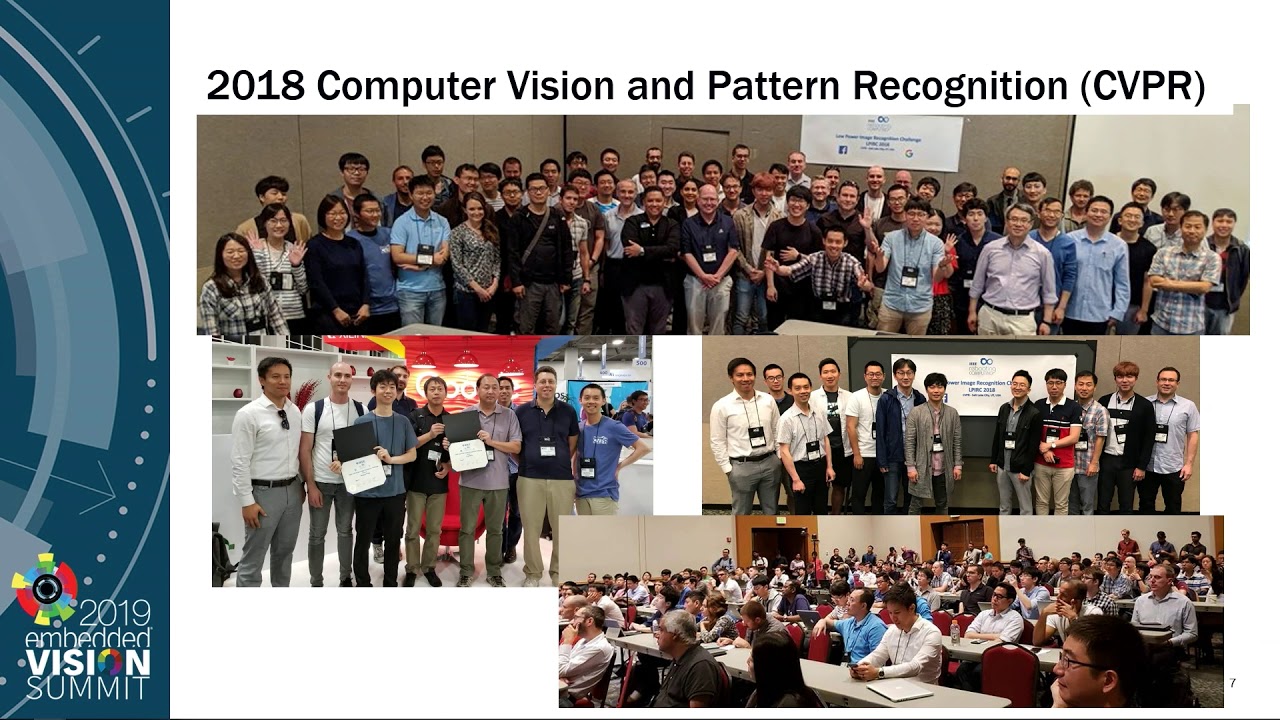
“Low-power Computer Vision: Status, Challenges and Opportunities,” a Presentation from Purdue University

Professor Yung-Hsiang Lu of Purdue University presents the "Low-power Computer Vision: Status, Challenges and Opportunities" tutorial at the May 2019 Embedded Vision Summit. Energy efficiency plays a crucial role in making computer vision successful in battery-powered systems, including drones, mobile phones and autonomous robots. Since 2015, IEEE has been organizing an annual competition on low-power

“Low-power Computer Vision: Status, Challenges and Opportunities,” a Presentation from Purdue University Read More +

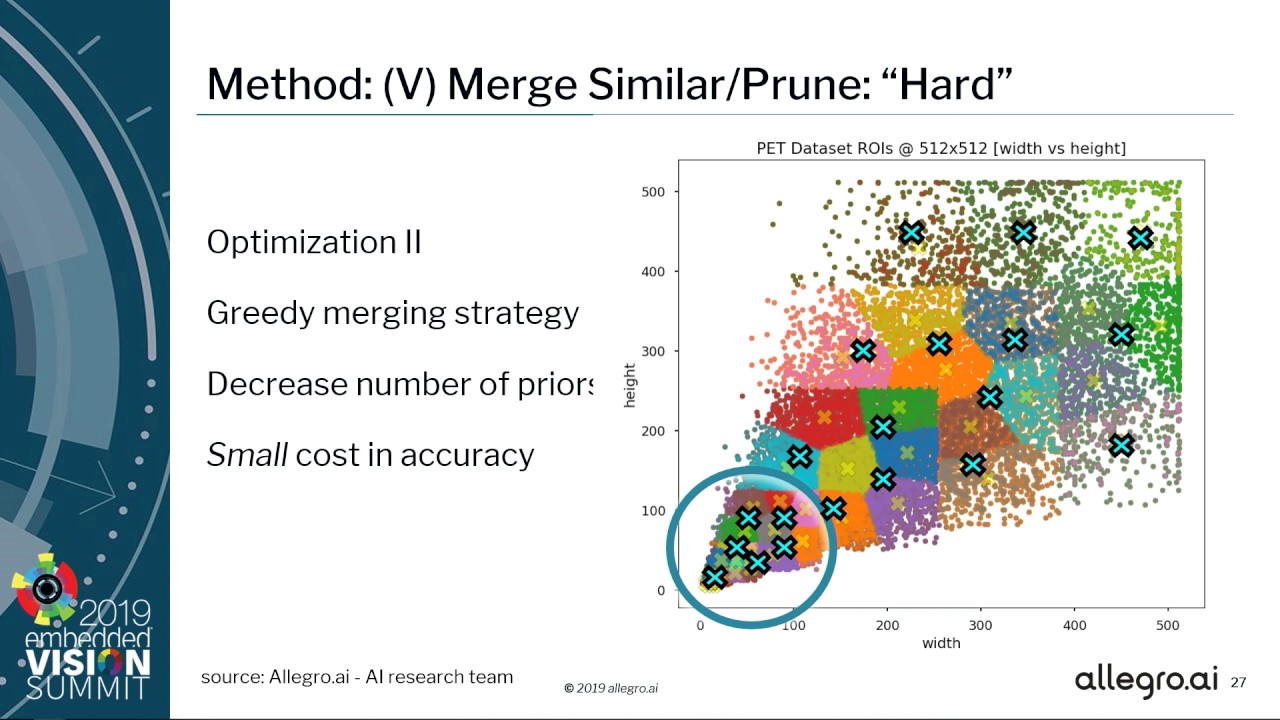
“Optimizing SSD Object Detection for Low-power Devices,” a Presentation from Allegro

Moses Guttmann, CTO and founder of Allegro, presents the "Optimizing SSD Object Detection for Low-power Devices" tutorial at the May 2019 Embedded Vision Summit. Deep learning-based computer vision models have gained traction in applications requiring object detection, thanks to their accuracy and flexibility. For deployment on low-power hardware, single-shot detection (SSD) models are attractive due

“Optimizing SSD Object Detection for Low-power Devices,” a Presentation from Allegro Read More +

Here you’ll find a wealth of practical technical insights and expert advice to help you bring AI and visual intelligence into your products without flying blind.

Contact

Address

Berkeley Design Technology, Inc.
PO Box #4446
Walnut Creek, CA 94596

Phone
Phone: +1 (925) 954-1411
Scroll to Top