Enabling Technologies

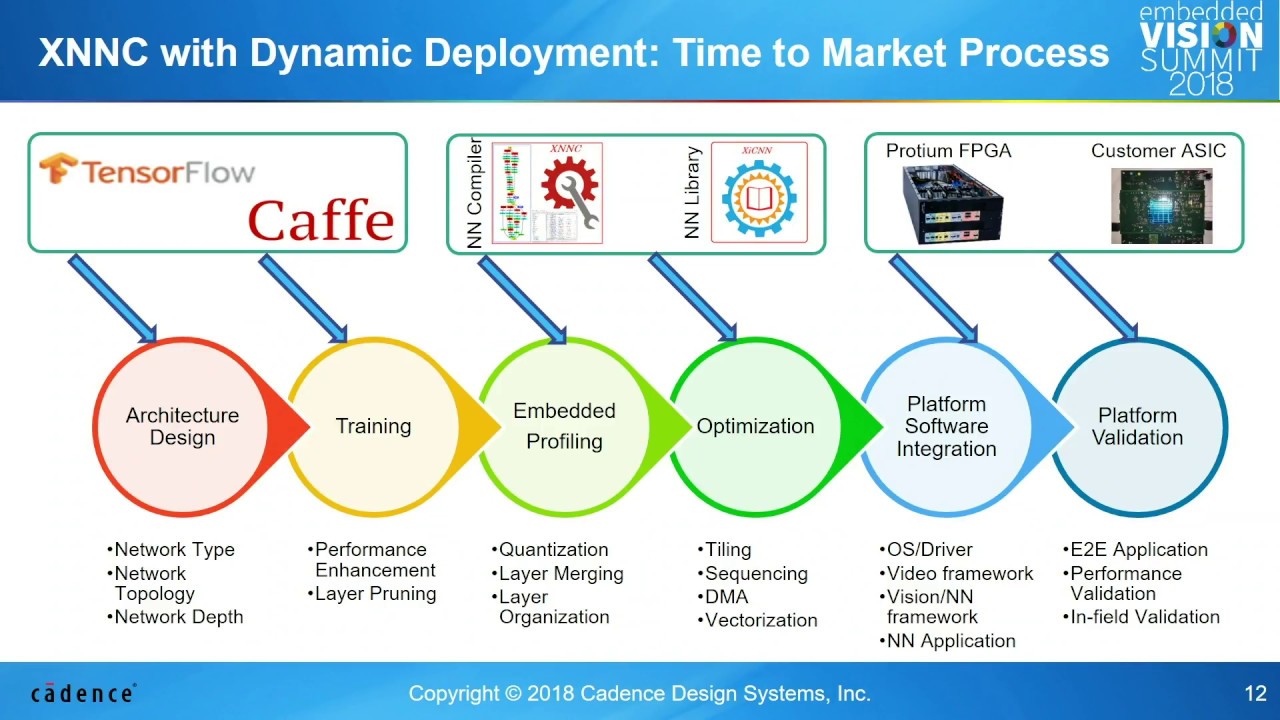
“Neural Network Compiler: Enabling Rapid Deployment of DNNs on Low-Cost, Low-Power Processors,” a Presentation from Cadence

Megha Daga, Senior Technical Marketing Manager at Cadence, presents the “Neural Network Compiler: Enabling Rapid Deployment of DNNs on Low-Cost, Low-Power Processors” tutorial at the May 2018 Embedded Vision Summit. The use of deep neural networks (DNNs) has accelerated in recent years, with DNNs making their way into diverse commercial products. But DNNs consume vast […]
“Neural Network Compiler: Enabling Rapid Deployment of DNNs on Low-Cost, Low-Power Processors,” a Presentation from Cadence Read More +

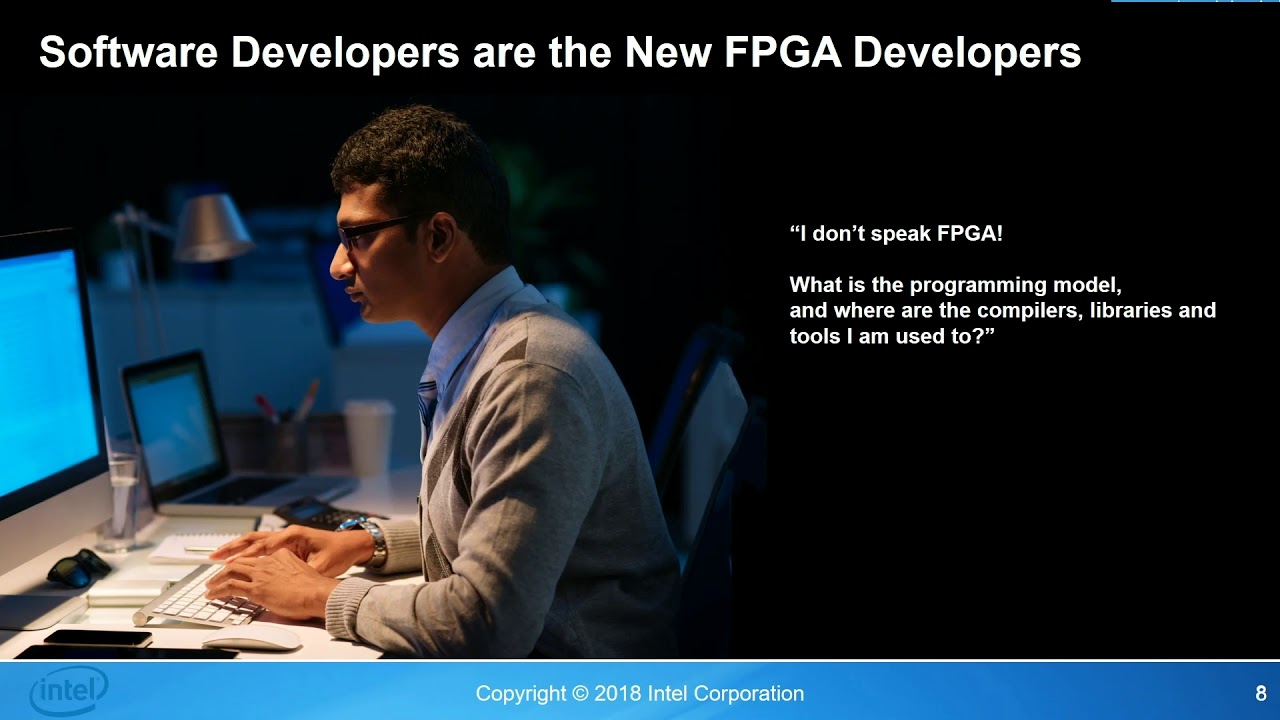
“Enabling Software Developers to Harness FPGA Compute Accelerators,” a Presentation from Intel

Bernhard Friebe, Senior Director of Marketing for the Programmable Solutions Group at Intel, presents the “Enabling Software Developers to Harness FPGA Compute Accelerators” tutorial at the May 2018 Embedded Vision Summit. FPGAs play a critical part in heterogeneous compute platforms as flexible, reprogrammable, multi-function accelerators. They enable custom-hardware performance with the programmability of software. The

“Enabling Software Developers to Harness FPGA Compute Accelerators,” a Presentation from Intel Read More +

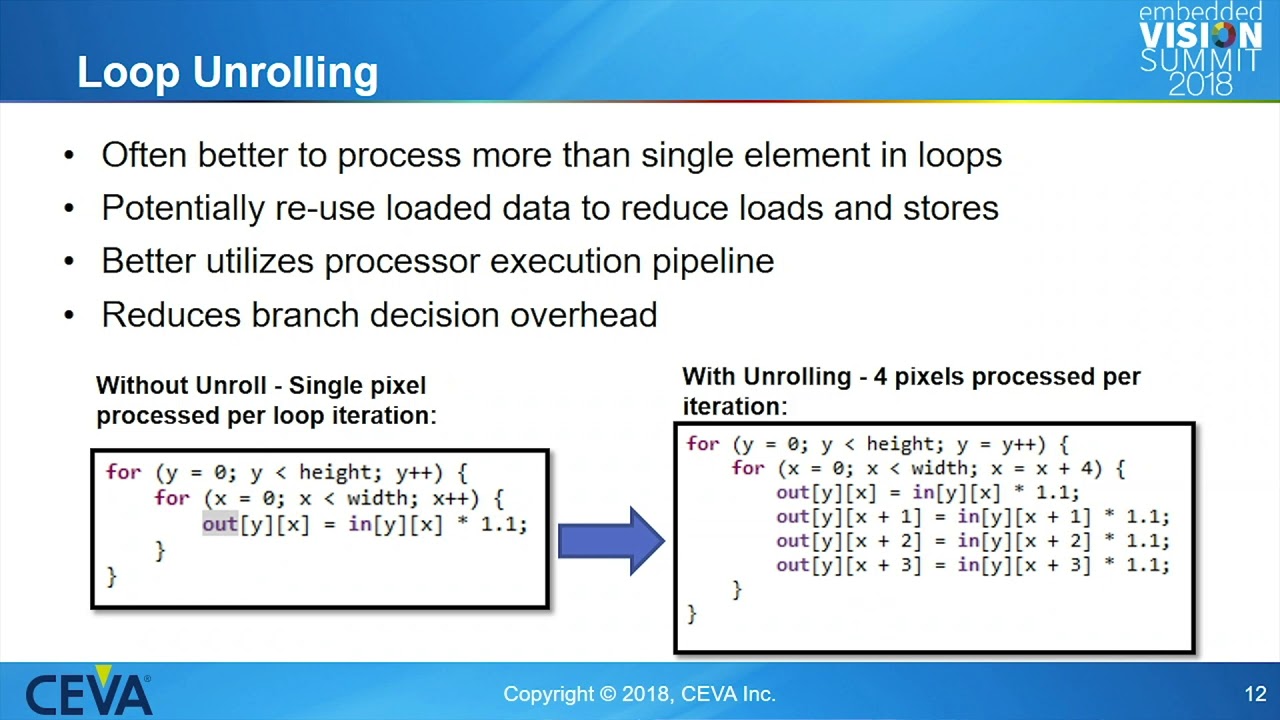
“Rapid Development of Efficient Vision Applications Using the Halide Language and CEVA Processors,” a Presentation from CEVA and mPerpetuo

Yair Siegel, Director of Business Development at CEVA, and Gary Gitelson, VP of Engineering at mPerpetuo, presents the “Rapid Development of Efficient Vision Applications Using the Halide Language and CEVA Processors” tutorial at the May 2018 Embedded Vision Summit. Halide is a domain-specific programming language for imaging and vision applications that has been adopted by

“Rapid Development of Efficient Vision Applications Using the Halide Language and CEVA Processors,” a Presentation from CEVA and mPerpetuo Read More +

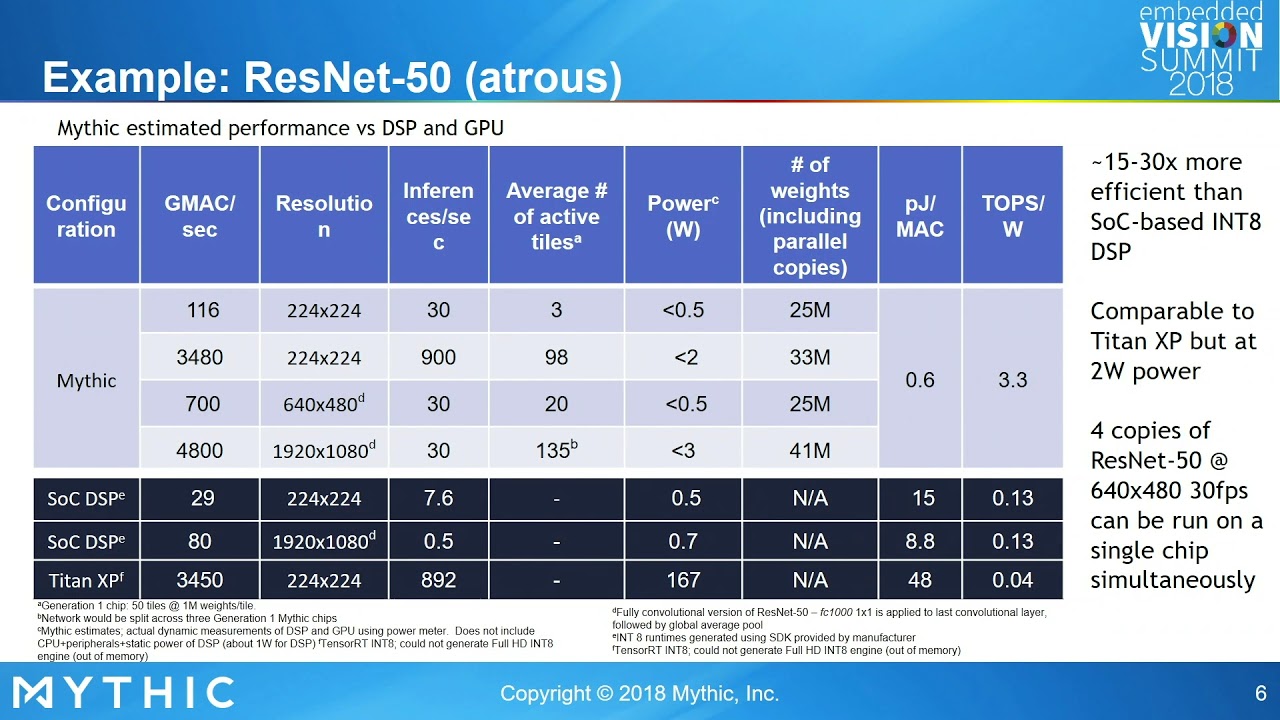
“Mythic’s Analog Deep Learning Accelerator Chip: High Performance Inference,” a Presentation from Mythic

Frederick Soo, Head of Product Development at Mythic, presents the “Mythic’s Analog Deep Learning Accelerator Chip: High Performance Inference” tutorial at the May 2018 Embedded Vision Summit. This presentation explains how Mythic’s deep learning accelerator chip uses a unique analog circuit approach to deliver massive power, speed and scalability advantages over current generation deep learning

“Mythic’s Analog Deep Learning Accelerator Chip: High Performance Inference,” a Presentation from Mythic Read More +

“Enabling Cross-platform Deep Learning Applications with the Intel CV SDK,” a Presentation from Intel

Yury Gorbachev, Principal Engineer and the Lead Architect for the Computer Vision SDK at Intel, presents the “Enabling Cross-platform Deep Learning Applications with the Intel CV SDK” tutorial at the May 2018 Embedded Vision Summit. Intel offers a wide array of processors for computer vision and deep learning at the edge, including CPUs, GPUs, VPUs

“Enabling Cross-platform Deep Learning Applications with the Intel CV SDK,” a Presentation from Intel Read More +

“At the Edge of AI At the Edge: Ultra-efficient AI on Low-power Compute Platforms,” a Presentation from Xnor.ai

Mohammad Rastegari, CTO of Xnor.ai, presents the “At the Edge of AI At the Edge: Ultra-efficient AI on Low-power Compute Platforms” tutorial at the May 2018 Embedded Vision Summit. Improvements in deep learning models have increased the demand for AI in several domains. These models demand massive amounts of computation and memory, so current AI

“At the Edge of AI At the Edge: Ultra-efficient AI on Low-power Compute Platforms,” a Presentation from Xnor.ai Read More +

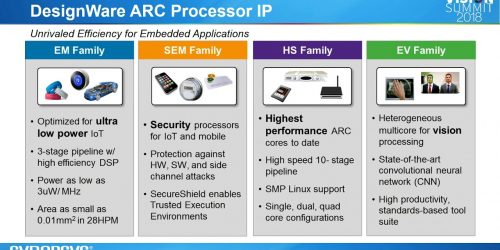
“Designing Smarter, Safer Cars with Embedded Vision Using EV Processor Cores,” a Presentation from Synopsys

Fergus Casey, R&D Director for ARC Processors at Synopsys, presents the “Designing Smarter, Safer Cars with Embedded Vision Using Synopsys EV Processor Cores” tutorial at the May 2018 Embedded Vision Summit. Consumers, the automotive industry and government regulators are requiring greater levels of automotive functional safety with each new generation of cars. Embedded vision, using

“Designing Smarter, Safer Cars with Embedded Vision Using EV Processor Cores,” a Presentation from Synopsys Read More +

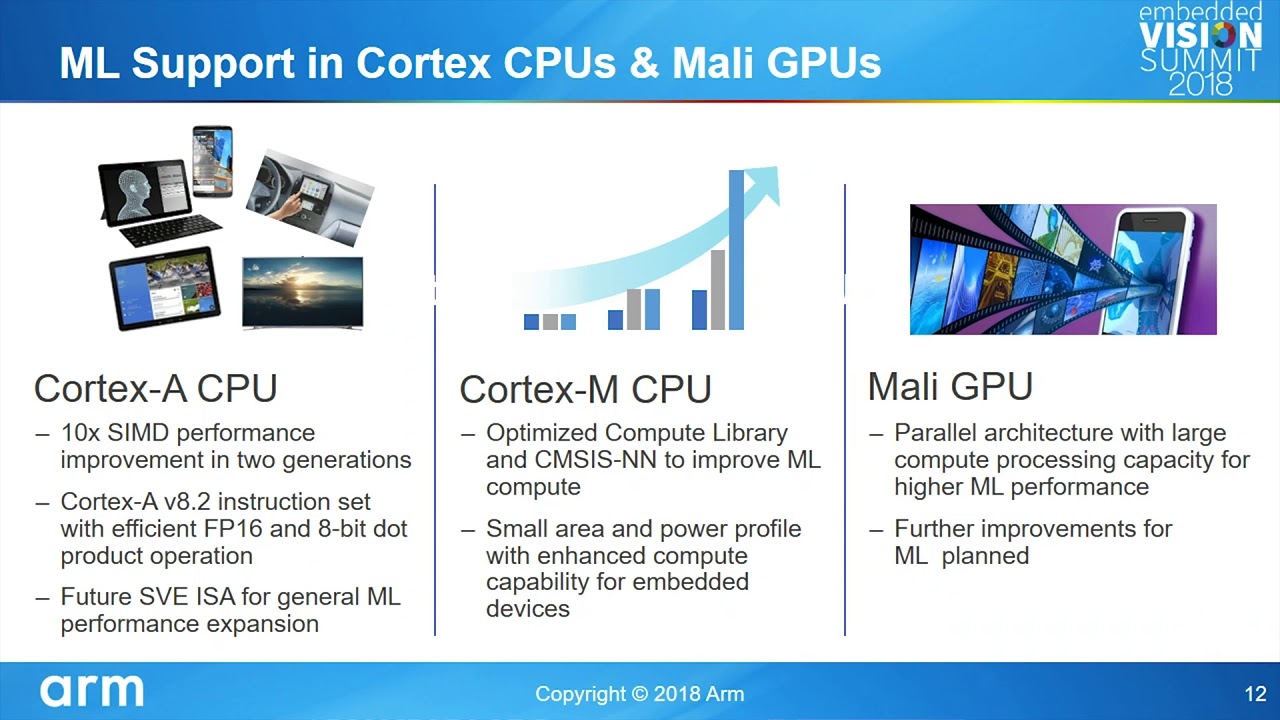
“Project Trillium: A New Suite of Machine Learning IP,” a Presentation from Arm

Steve Steele, Director of Platforms in the Machine Learning Group at Arm, presents the “Project Trillium: A New Suite of Machine Learning IP from Arm” tutorial at the May 2018 Embedded Vision Summit. Machine learning processing engines today tend to focus on specific device classes or the needs of individual sectors. Arm’s Project Trillium changes

“Project Trillium: A New Suite of Machine Learning IP,” a Presentation from Arm Read More +

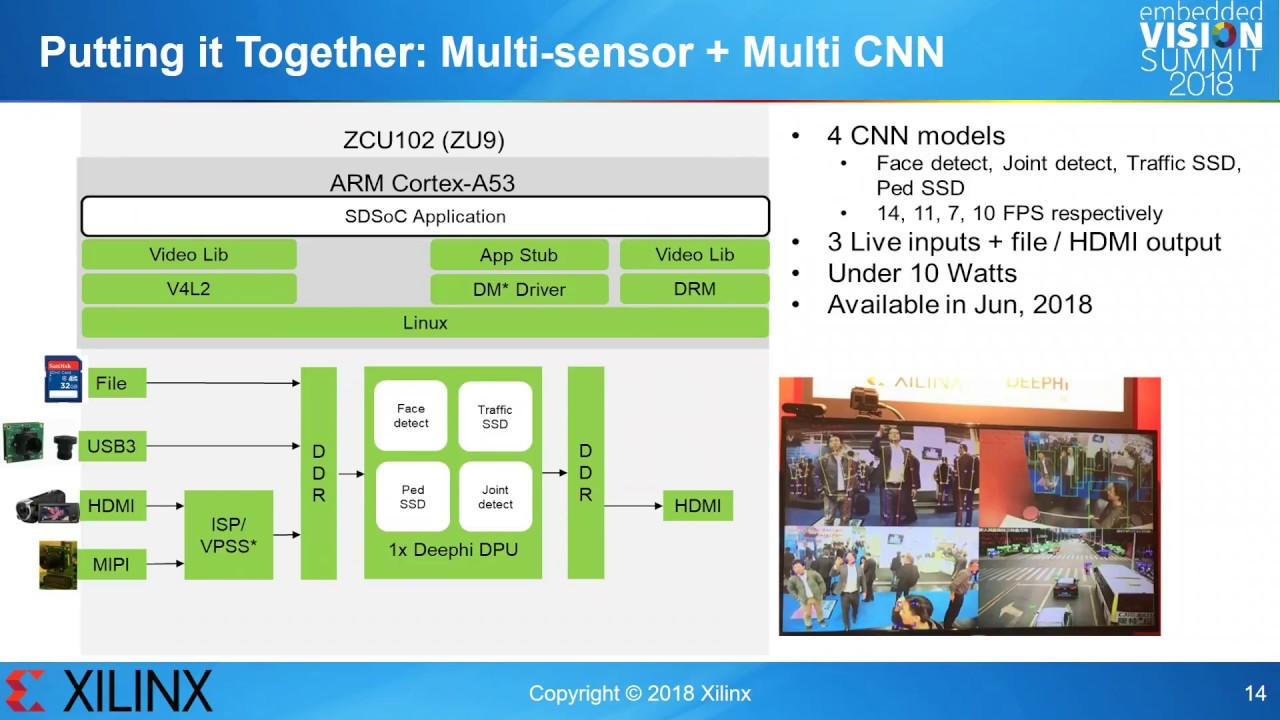
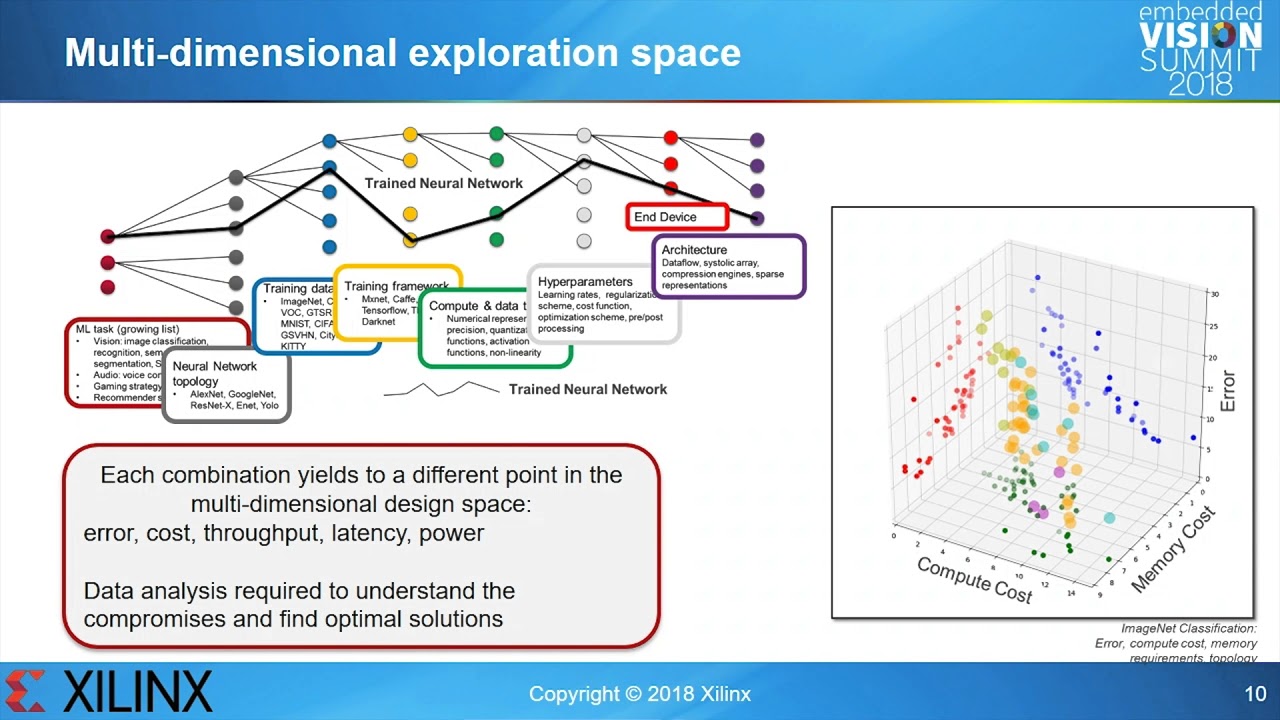
“Achieving 15 TOPS/s Equivalent Performance in Less Than 10 W Using Neural Network Pruning,” a Presentation from Xilinx

Nick Ni, Director of Product Marketing for AI and Edge Computing at Xilinx, presents the “Achieving 15 TOPS/s Equivalent Performance in Less Than 10 W Using Neural Network Pruning on Xilinx Zynq” tutorial at the May 2018 Embedded Vision Summit. Machine learning algorithms, such as convolution neural networks (CNNs), are fast becoming a critical part

“Achieving 15 TOPS/s Equivalent Performance in Less Than 10 W Using Neural Network Pruning,” a Presentation from Xilinx Read More +

“Exploiting Reduced Precision for Machine Learning on FPGAs,” a Presentation from Xilinx

Kees Vissers, Distinguished Engineer at Xilinx, presents the “Exploiting Reduced Precision for Machine Learning on FPGAs” tutorial at the May 2018 Embedded Vision Summit. Machine learning algorithms such as convolutional neural networks have become essential for embedded vision. Their implementation using floating-point computation requires significant compute and memory resources. Research over the last two years

“Exploiting Reduced Precision for Machine Learning on FPGAs,” a Presentation from Xilinx Read More +

Here you’ll find a wealth of practical technical insights and expert advice to help you bring AI and visual intelligence into your products without flying blind.

Contact

Address

Berkeley Design Technology, Inc.
PO Box #4446
Walnut Creek, CA 94596

Phone
Phone: +1 (925) 954-1411
Scroll to Top