
PROVIDER

Low-power Computer Vision Challenge: Empowering AI Development on Edge Devices

This blog post was originally published at Qualcomm’s website. It is reprinted here with the permission of Qualcomm. The Low-Power Computer Vision Challenge (LPCVC) is an annual competition organized by the Institute of Electrical and Electronics Engineers (IEEE) to improve the energy efficiency of computer vision technologies for systems with constrained resources. Established in 2015 […]

Low-power Computer Vision Challenge: Empowering AI Development on Edge Devices Read More +

“Beyond the Demo: Turning Computer Vision Prototypes into Scalable, Cost-effective Solutions,” a Presentation from Plainsight Technologies

Kit Merker, CEO of Plainsight Technologies, presents the “Beyond the Demo: Turning Computer Vision Prototypes into Scalable, Cost-effective Solutions” tutorial at the May 2025 Embedded Vision Summit. Many computer vision projects reach proof of concept but stall before production due to high costs, deployment challenges and infrastructure complexity. This presentation explores the path from prototype

“Beyond the Demo: Turning Computer Vision Prototypes into Scalable, Cost-effective Solutions,” a Presentation from Plainsight Technologies Read More +

VeriSilicon Expands DSP Portfolio with Silicon-proven ZSP5000 Vision Core Series for Edge Intelligence

Highly scalable architecture optimized for computer vision and image workloads with extendable instruction set Shanghai, China, June 26, 2025–VeriSilicon (688521.SH) today released the ZSP5000 Digital Signal Processing (DSP) series IPs, which are based on its fifth-generation silicon-proven DSP architecture. This product line adopts a highly scalable and energy-efficient design, and has been deeply optimized for

VeriSilicon Expands DSP Portfolio with Silicon-proven ZSP5000 Vision Core Series for Edge Intelligence Read More +

Edge AI and Vision Insights: June 25, 2025

LANGUAGE MODEL OPTIMIZATIONS FOR EDGE PROCESSORS Bridging the Gap: Streamlining the Process of Deploying AI onto Processors Large language models often demand hand-coded conversion scripts for deployment on each distinct processor-specific software stack—a process that’s time-consuming and prone to error. In this highly rated 2025 Embedded Vision Summit presentation, Taesu Kim, Chief Technology Officer at

Edge AI and Vision Insights: June 25, 2025 Read More +

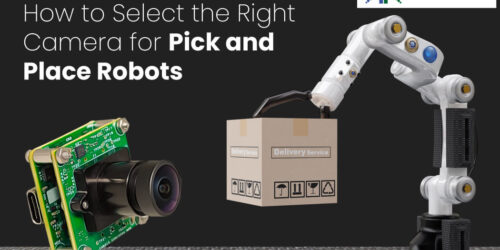
How to Select the Right Camera for Pick and Place Robots

This blog post was originally published at e-con Systems’ website. It is reprinted here with the permission of e-con Systems. Pick and place robots handle repetitive, labor-intensive tasks. They help deliver high throughput and seamless workflows, thanks to camera solutions. Get expert insights on how cameras work in these robots, their challenges, use cases, and

How to Select the Right Camera for Pick and Place Robots Read More +

“Running Accelerated CNNs on Low-power Microcontrollers Using Arm Ethos-U55, TensorFlow and Numpy,” a Presentation from OpenMV

Kwabena Agyeman, President of OpenMV, presents the “Running Accelerated CNNs on Low-power Microcontrollers Using Arm Ethos-U55, TensorFlow and Numpy” tutorial at the May 2025 Embedded Vision Summit. In this presentation, Agyeman introduces the OpenMV AE3 and OpenMV N6 low-power, high-performance embedded machine vision cameras, which are 200x better than the company’s previous generation systems. He

“Running Accelerated CNNs on Low-power Microcontrollers Using Arm Ethos-U55, TensorFlow and Numpy,” a Presentation from OpenMV Read More +

Semiconductor Foundry Landscape to Transform by 2030

This market research report was originally published at the Yole Group’s website. It is reprinted here with the permission of the Yole Group. Yole Group’s new report, Status of the Semiconductor Foundry Industry, explores the geopolitical, economic, and capacity realignments reshaping the semiconductor foundry industry. KEY TAKEAWAYS: Foundry capacity is forecasted to grow at 4.3%

Semiconductor Foundry Landscape to Transform by 2030 Read More +

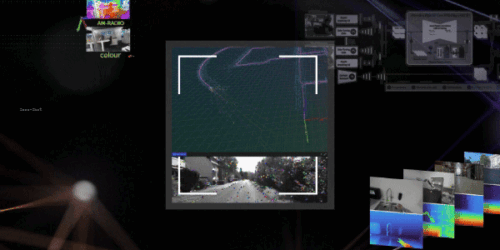
R²D²: Building AI-based 3D Robot Perception and Mapping with NVIDIA Research

This blog post was originally published at NVIDIA’s website. It is reprinted here with the permission of NVIDIA. Robots must perceive and interpret their 3D environments to act safely and effectively. This is especially critical for tasks such as autonomous navigation, object manipulation, and teleoperation in unstructured or unfamiliar spaces. Advances in robotic perception increasingly

R²D²: Building AI-based 3D Robot Perception and Mapping with NVIDIA Research Read More +

“Scaling i.MX Applications Processors’ Native Edge AI with Discrete AI Accelerators,” a Presentation from NXP Semiconductors

Ali Osman Ors, Director of AI ML Strategy and Technologies for Edge Processing at NXP Semiconductors, presents the “Scaling i.MX Applications Processors’ Native Edge AI with Discrete AI Accelerators” tutorial at the May 2025 Embedded Vision Summit. The integration of discrete AI accelerators with edge processors is poised to revolutionize the capabilities of edge computing,

“Scaling i.MX Applications Processors’ Native Edge AI with Discrete AI Accelerators,” a Presentation from NXP Semiconductors Read More +

Unlocking the Power of Edge AI With Microchip Technology

This blog post was originally published at Microchip Technology’s website. It is reprinted here with the permission of Microchip Technology. From the factory floor to the operating room, edge AI is changing everything. Here’s how Microchip is helping developers bring real-time intelligence to the world’s most power-constrained devices. Not long ago, Artificial Intelligence (AI) lived

Unlocking the Power of Edge AI With Microchip Technology Read More +

Here you’ll find a wealth of practical technical insights and expert advice to help you bring AI and visual intelligence into your products without flying blind.

Contact

Address

Berkeley Design Technology, Inc.
PO Box #4446
Walnut Creek, CA 94596

Phone
Phone: +1 (925) 954-1411
Scroll to Top